A machine that works flawlessly in the hall can become problematic as soon as it starts entering the cold room. The battery lasts less, the lifting is slower, the machine goes for service more often, and no one can say exactly why — because the machine is the same, the worker is the same, and the job is the same.
The reason is that it’s not just the cold that works below zero. Moisture also works, and that is the part that costs the most.
Content
- Condensation: the biggest cause of breakdowns
- Battery in the cold
- Hydraulics and lubricants
- Tires, seals and hoses
- Why diesel in the refrigerator is out of the question
- What does performance mean for a refrigerator?
- Work organization — the cheapest solution
- Handler
- What of the offer makes sense
Condensation: the biggest cause of breakdowns
When a cold machine exits into a warm zone, moisture from the warm air condenses on every cold surface—outside and inside. Water ends up on the connectors, on the printed circuit boards, in the housing of the control unit, on the bearings and on the brake components.
One such transition means nothing. But a machine that goes in and out of cold storage twenty times a day goes through twenty cycles of condensation, five days a week. The result is corrosion in places where no one is looking for it and seemingly random electronics failures.
That’s why the most valuable rule is simple: reduce the number of passes, not the temperature. A machine that stays in the cooler for the entire shift has significantly less of a problem than a machine that is constantly going in and out.
Battery in the cold
A battery at low temperature gives less capacity. It’s not a malfunction, it’s chemistry — the reaction is slower, so the available energy is less. A machine that works for eight hours in the hall will work significantly less in the cold room at minus twenty.
Practical consequences:
- battery capacity is planned with a margin, not “just”
- the battery is charging in the warm zone, not in the refrigerator — charging a cold battery is inefficient and harmful
- a cold battery needs time to warm up before charging
- with a lead-acid battery, attention should be paid to the density of the electrolyte: a discharged battery freezes more easily than a charged one
A lithium battery is usually a better choice in the refrigerator, but it also has limits — charging at very low temperatures is not allowed for all types and requires checking the instructions. Details of the differences in the text lithium-ion or lead-acid battery, and about maintenance in the text maintenance of the traction battery.
Hydraulics and lubricants
Hydraulic oil thickens in the cold. The consequence is immediately visible: lifting is slower, the pump works harder, and the system is under a greater load until the oil warms up.
The solution is oil designed for low temperatures, with the appropriate viscosity. The same applies to the grease in the grease nipples and to the oil in the reducer — standard grease at minus twenty becomes hard and stops doing its job.
Along with it comes a habit: the machine is not fully loaded for the first few minutes, but let the system circulate the oil.
Tires, seals and hoses
Rubber hardens in the cold and loses grip. On the floor of the cold store, which can be wet or icy, this means a longer stopping distance and easier skidding when moving with a load.
For work in the refrigerator, there are rubber compounds intended for low temperatures, which retain elasticity. More about types and dimensions in the text tires for forklifts.
Gaskets and hoses also become stiffer and more prone to cracking, especially where they bend. That’s why the hoses of machines in the refrigerator are checked more often than the standard plan dictates.
Why diesel in the refrigerator is out of the question
A refrigerator is a closed space with poor air exchange — that’s its purpose. Exhaust gases in such a space are not diluted, but accumulated, in the place where goods for human consumption stand.
That’s why it’s in the fridge electric machine the only reasonable choice. We have provided a comparison of all three drives in the text electric, diesel or LPG forklift.
What does performance mean for a refrigerator?
Cold storage machines are not the same as standard machines, although they look identical from the outside. The differences are in the details that are not visible:
- shielded and sealed electronics and connectors
- oils and fats for low temperatures
- gaskets and hoses made of materials that remain elastic
- display that works below zero
- corrosion protection in sensitive areas
- for machines with a cab — heating and heated glass
When ordering, it is therefore important that from the beginning you say that the machine goes into the refrigerator and at what temperature. Subsequent adjustments are more expensive and are never complete.
Work organization — the cheapest solution
The best effect per dinar invested is provided by organization, not equipment:
- Separate machines by zones. One machine works inside the cold storage and does not go out, the other takes pallets in the intermediate zone. This reduces the number of transitions to a minimum.
- Create an intermediate zone. The space with the temperature between the cold store and the hall reduces the temperature jump and the amount of condensation.
- Charge the batteries in the warm zone.
- If the machine must be taken out, leave it to dry. A few minutes in the warm before re-importing solves most of the problem.
- Shorten maintenance intervals. The machine in the refrigerator does not work under standard conditions, so the plan cannot be standard either — see maintenance plan.
Handler
A man in a cold store is just as exposed as a machine. What has proven to be necessary in practice: appropriate protective clothing and footwear, limited continuous time with breaks in the warm zone, and a machine that can be driven with gloves — controls that require precision with bare fingers are not a choice for the refrigerator.
Fatigue in the cold comes faster and is less noticeable, and it is precisely fatigue that is the most common trigger for maneuver errors.
What of the offer makes sense
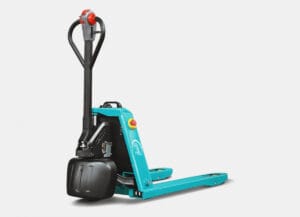
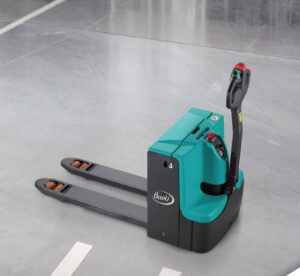
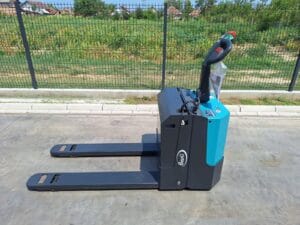
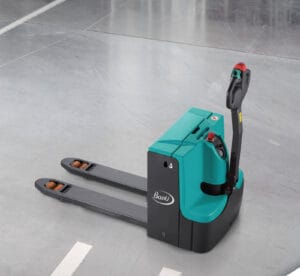
For horizontal transport and reception of goods, lithium electric pallets are a natural choice because they do not need electrolyte maintenance or a charging station — KBP 15L carries 1,500 kg, a KBP 14H it has 48 V and charges in two hours.
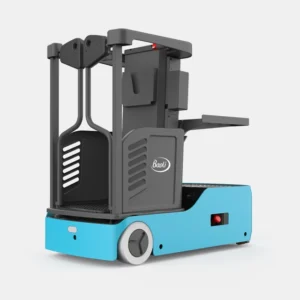
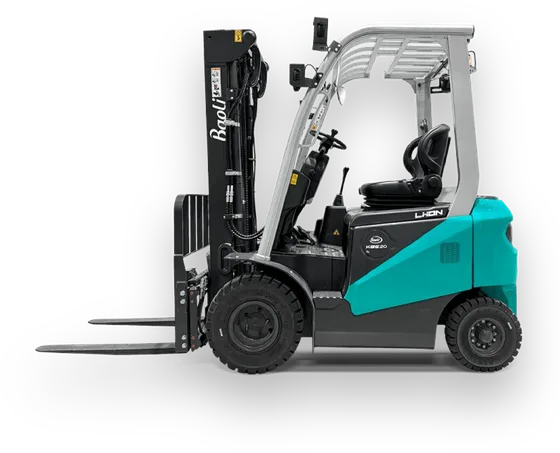
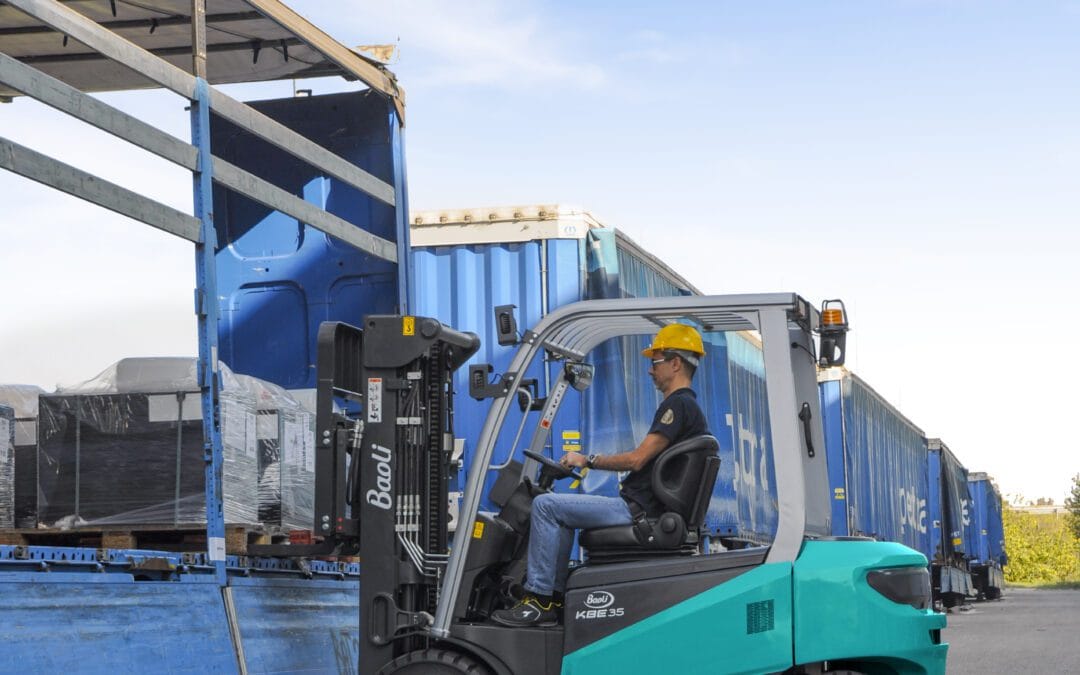
For storage in the racks inside the refrigerator, the category is electric stacker. For larger loads and counterweight work, Baoli KBE 25-35 it covers the range from 2.5 to 3.5 tons and can be configured with a lithium battery.
Tell us what the temperature is in the refrigerator, how many hours a day the machine works inside and how many times a day it goes out — from these three data, the machine and the design are selected. Write through request for quotation or call 021/6040-505.
Electric forklifts on offer
Look at the models we offer and choose the performance for your business.