The question is almost always asked the same way: “How much more expensive is lithium?” The answer to that question does not solve anything, because the two technologies do not differ only in the price on the invoice. They differ in how much space they require, how much time they take up and how many times a day you have to think about them.
In this article, we compare the lead-acid traction battery and the lithium-ion battery through the actual driving experience — charging, maintenance, life and total cost — and finally give a simple rule of thumb to make a decision in minutes.

Content
- Two technologies, two ways of working
- Charging: this is where the biggest difference is
- Maintenance and battery space
- Lifetime: How many cycles you actually get
- Price vs. total cost
- When lead is still the smarter choice
- When lithium pays off
- Quick decision rule
- What exactly do we have to offer?
Two technologies, two ways of working
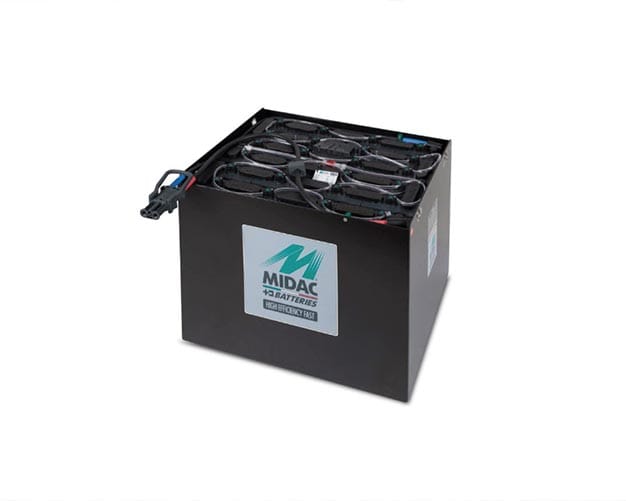
The lead-acid traction battery works on a principle that is more than a century old, and that is exactly why it is reliable and cheap to manufacture. The cells are filled with liquid electrolyte, the battery is heavy, and that weight in a forklift is not a disadvantage — it is part of the counterweight. Replacing a lead-acid battery with a lighter lithium in counterbalanced forklifts therefore requires additional ballast, a detail that is often overlooked.
The lithium-ion battery, in the variant used in warehouse technology, works without liquid electrolyte to be replenished and without gases released during charging. That’s one sentence, but from it comes almost everything else: no charging room, no water topping up, no equalizing charging, no mid-shift battery swap.
The difference in shift behavior is also measurable. The voltage of the lead-acid battery decreases as it discharges, so towards the end of the shift, the forklift visibly lifts the load more slowly. The lithium one maintains an almost constant voltage until near the end of capacity — the last pallet in the shift goes at the same speed as the first.
Charging: this is where the biggest difference is
A lead-acid battery takes about eight hours to charge, and after charging it takes about that long to cool down. This means that one battery covers one shift. For two shifts, you need a second battery, a cart or crane to change, and a space to do that change — and the change itself takes between ten and twenty minutes per machine, every day.
The lithium battery charges quickly and, more importantly, can be partially charged. Twenty minutes on the charger during your lunch break restores a significant amount of capacity, and it doesn’t harm the battery — there’s no memory effect and there’s no rule that it has to be discharged before charging. In practice, this means that one machine with one battery covers two shifts, without a replacement battery and without a charging room.
There is also a difference that you pay with electricity. A lead-acid battery spends part of the received energy on heating and electrolysis, so charging efficiency is typically around three quarters. In this regard, lithium is much closer to one hundred percent. On one machine it’s a small thing; on ten machines that work daily, it is an item that appears on the bill.
Maintenance and battery space
A lead-acid battery requires a routine: topping up with distilled water, checking the electrolyte level, cleaning the poles, periodically equalizing charging. None of it is complicated, but it all requires someone to be in charge and to do it regularly. A neglected lead-acid battery loses capacity much faster than it should, and sulfation is an irreversible process.
The room goes with it. When charging a lead battery, hydrogen is released, so the space must be ventilated and separated, with appropriate protection. That’s the square footage you’ve taken out of the warehouse, and the ongoing ventilation costs.
A lithium battery has none of that. The charger can stand next to the workplace. No topping up, no gas, no separate room. For smaller drives where every square meter is in use, this can be a decisive argument — independent of the price of the battery itself.
Lifetime: How many cycles you actually get
Battery life is measured in charge cycles, not years. A quality lead-acid traction battery, if properly maintained, will give approximately 1,200 to 1,500 cycles. With one cycle per day and five working days per week, that’s on the order of five years.
A lithium-ion battery gives two to three times more cycles under the same conditions. In addition, a partial charge is not counted as a full cycle, so in practice the difference increases a little more.
Important note: both figures are valid under normal use. A lead-acid battery that is regularly discharged to the end, left empty over the weekend and not topped up with water will not come close to the declared life. Lithium is forgiving in this regard, but does not like extreme temperatures and requires a proper charger.
Price vs. total cost
A lithium battery on the invoice is two to three times more expensive than a lead-acid battery of the same capacity. If you look at that number alone, the decision seems clear. But the total cost of ownership also includes items that are paid every day:
- a spare battery for the second shift, if you work a double shift
- equipment and space for replacement and charging
- operator time spent on battery replacement
- regular electrolyte maintenance
- current wasted on inefficient charging
- longer life — a lithium battery often covers two lead replacement cycles
We wrote about how the total cost is calculated in a broader sense in the text how much does a forklift really cost — the same principle applies to the battery.
When lead is still the smarter choice
Not everyone should switch to lithium. A lead-acid battery remains a sensible decision when:
- you work one shift and the machine sits quietly on the charger overnight
- the forklift does not work every day, but occasionally, during peak hours
- you already have a charging room set up and a maintenance system that works
- it is a counterbalanced forklift where the weight of the battery serves as part of the counterweight
- the procurement budget is fixed and narrow, and the machine is planned for a shorter period
When lithium pays off
A lithium battery recharges fastest in these situations:
- work in two or three shifts — the need for a replacement battery and replacement space disappears
- small warehouse equipment that is charged at a regular 230 V socket
- work in the food industry, refrigerators and areas where filling gases are not acceptable
- plants without free space for a separate filling station
- machines that work unevenly — half an hour of work, half an hour off, then again
Quick decision rule
If you want a one-sentence answer: if the machine works one shift — the lead one is quite enough; if you work more than one shift or you don’t have a place to build a charging station — lithium is worth it.
| The situation | Recommendation |
|---|---|
| One shift, charging overnight | Lead |
| Two or three shifts | Lithium |
| There is no place for a filling station | Lithium |
| Casual work, a few hours a week | Lead |
| Cold storage or food production | Lithium |
| Counterbalance forklift, standard mode | Lead, with a counterweight check if switching to lithium |
What exactly do we have to offer?
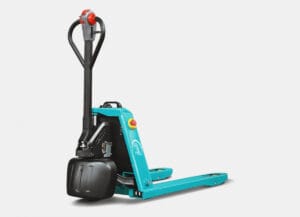
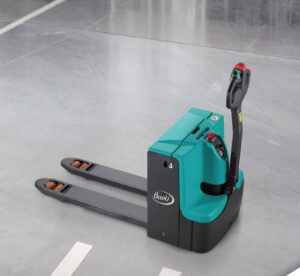
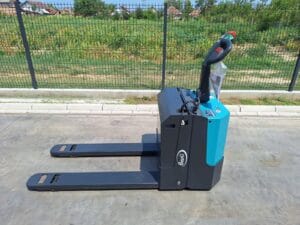
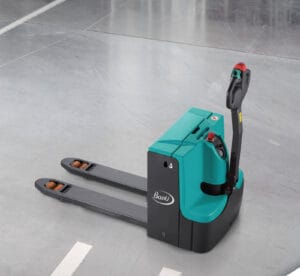
For small warehouse equipment, lithium is practically the standard today. Baoli KBP 15L it carries 1,500 kg and runs on a 24 V / 30 Ah Li-ion battery, with an autonomy of about four working hours — the price is €2,200 + VAT. Stronger KBP 14H it has 48 V / 30 Ah Li-ion and charges in two hours on a regular 230 V outlet, at a price of €3,800 + VAT.
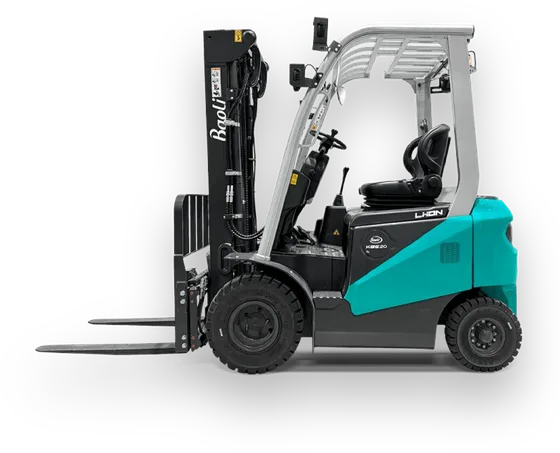
With counterbalanced forklifts, there is a choice in both directions. Baoli KBE 18-20 Li-ion is built around a lithium battery and recharges during a break, without replacement. KBE 25-35 is supplied with both an 80 V (360–600 Ah) lead-acid battery and an 80 V (277–412 Ah) lithium battery, so the same machine can be configured according to the operating mode — the price starts from €19,000 + VAT.
Batteries for forklifts on offer
Look at the models we offer and choose the performance for your business.
Payment for registered business entities in the Republic of Serbia is made in dinar equivalent at the middle exchange rate of the NBS on the day of payment. The guarantee for legal entities is 12 months*.
If you’re not sure what suits your work schedule, tell us how many shifts the machine works and how many hours a day it’s actually in motion — these are the two pieces of data from which the decision is made. Write to us via asked for an offer or call 021/6040-505. If you just need a new battery for your existing machine, take a look at the offer battery for forklifts.
* The guarantee is contracted in accordance with the valid laws of the Republic of Serbia.