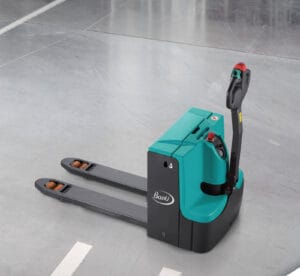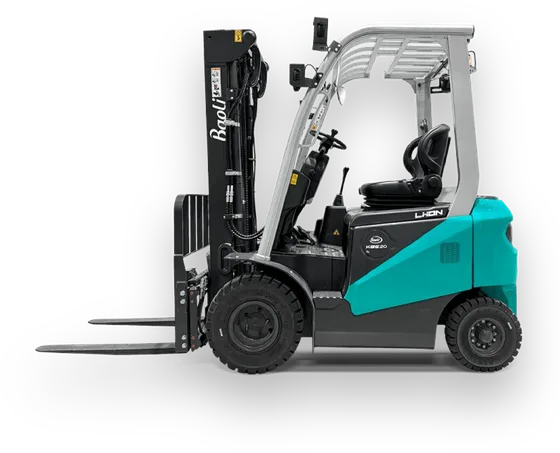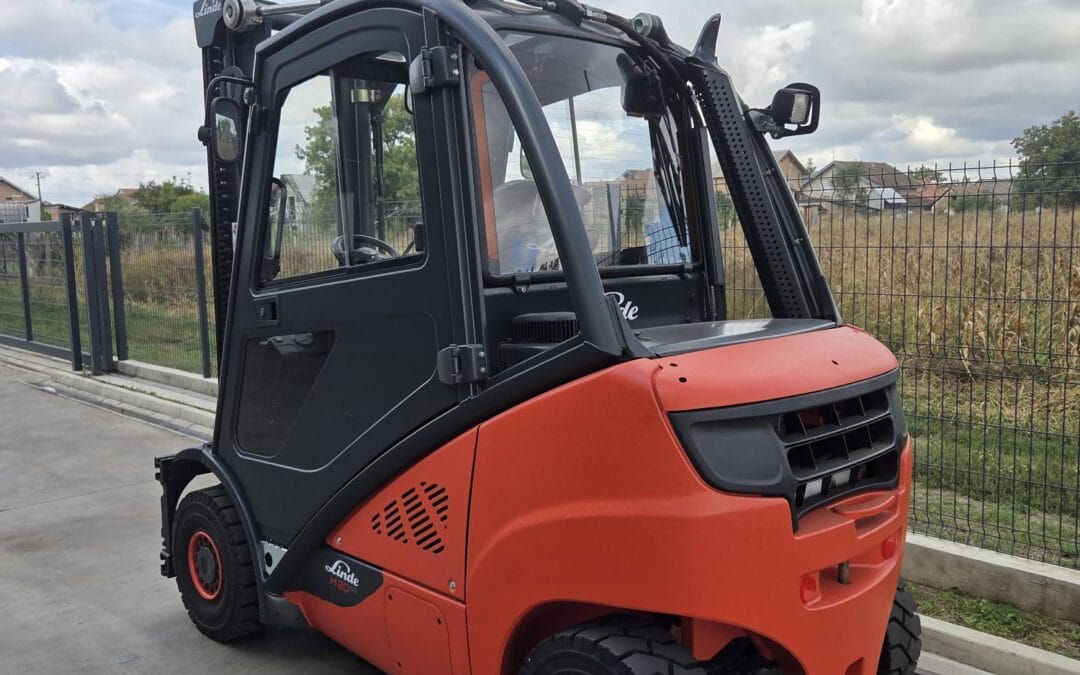
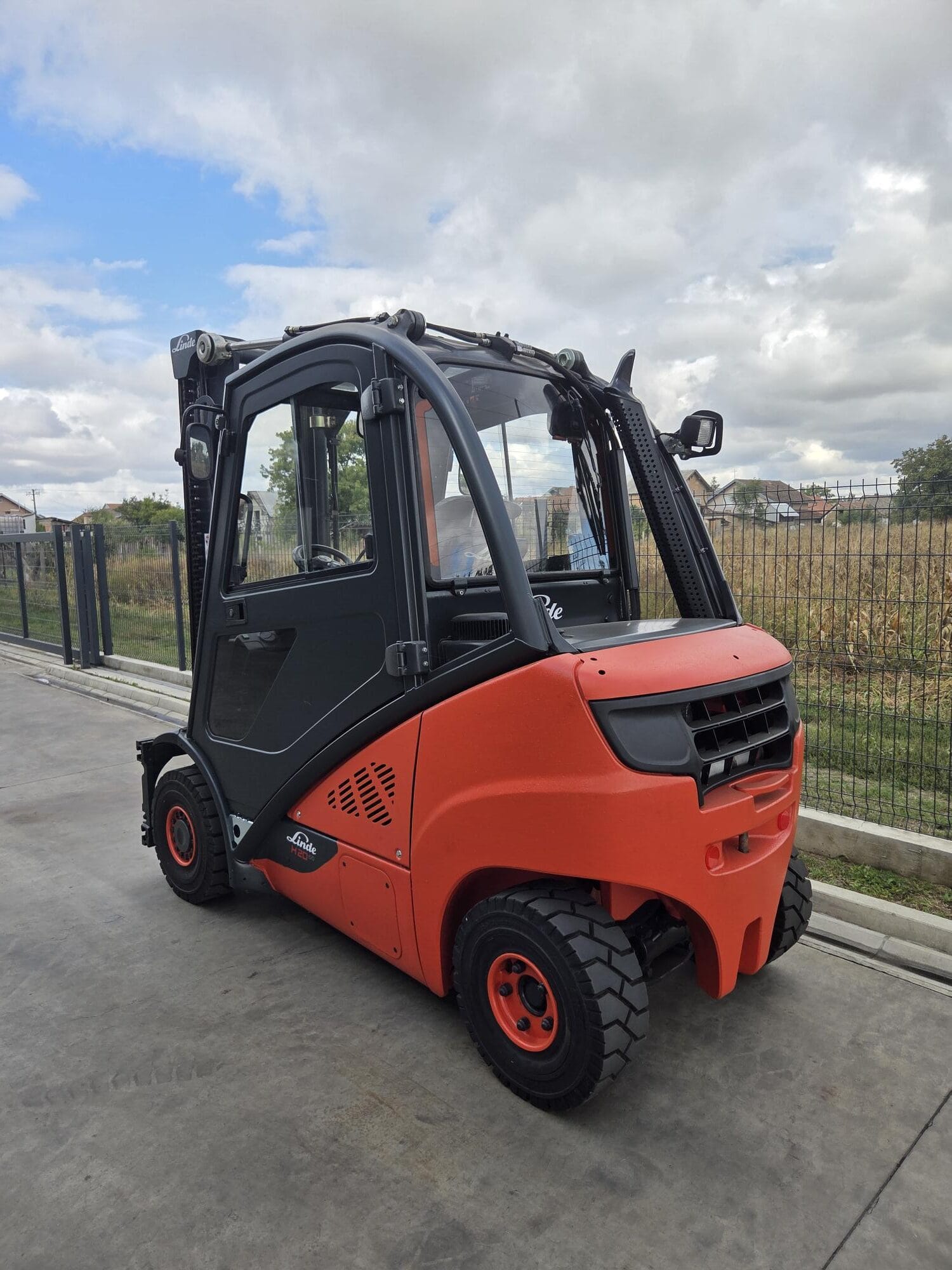
The forklift truck almost never stops without warning. The problem is that the announcement is usually not recognized as an announcement, but as “the machine is old” or “this is how it has always worked”. A few weeks usually pass between the first sign and the day the machine sits in the warehouse — enough to get the job done at the agreed time, instead of in the middle of rush hour.
These are five signs that are worth knowing by heart, because each of them occurs before a breakdown and each has a clear interpretation.
Content
- 1. The load falls by itself when the machine is stationary
- 2. The mast is raised jerkily or askew
- 3. There was a noise that was not there before
- 4. Idle travel in the steering wheel or the machine pulls to the side
- 5. The stopping distance has been extended
- Three signs that are easily overlooked
- When it stops immediately
- How not to lose the sign
1. The load falls by itself when the machine is stationary
What to see: you lift the pallet, the machine stands with its foot off the pedal, and the forks visibly lower in a minute or two. Sometimes this is only noticed when the load is lowered onto the rack lower than intended.
What does it mean: oil goes where it shouldn’t. Most often it is seals in the lift cylinder or a valve that does not hold. With newer machines, the cause can also be an electromagnetic valve that does not close completely.
Why it’s serious: this is the only sign on this list that directly threatens people. A load that slowly collapses while someone is under or next to it is an accident waiting to happen. The rate of deterioration also increases with time, and not linearly.
What to do: the machine is not used for work at height until it is repaired. This is not an exaggeration, but the only correct reaction.
2. The mast is raised jerkily or askew
What to see: the lifting is not smooth — the machine “hiccup”, stops and then starts, or one side of the fork carriage rises faster than the other, so the pallet is slightly crooked.
What does it mean: jerking when lifting usually indicates air in the hydraulic system, low oil level or a dirty filter. Uneven lifting usually means unevenly tensioned chains or worn mast rollers and guides.
Why it’s serious: unequally tensioned chains mean that one chain is carrying more than its share. A chain that is overloaded will elongate faster, and when it does, it will give way suddenly.
What to do: check the level and condition of the hydraulic oil and measure the elongation of the chains. Reminder from the text of Fr maintenance plan: the chain is changed when it has lengthened by about two to three percent, and is changed in pairs.
3. There was a noise that was not there before
What is heard: howling when lifting, knocking when changing direction, squealing from the rear of the machine, screeching when turning.
What does it mean: lift-off squeal usually comes from a hydraulic pump running dry or sucking air. Knocking when changing direction indicates a transmission or powertrain backlash. Whining and screeching usually means a bearing or a lack of lubrication.
Why it’s serious: noise is the cheapest diagnostic tool you have, and the only one that works without any instruments. An operator who listens to the same machine every day recognizes a new noise the same day it appears—if he is told to report it.
What to do: report immediately, don’t wait for it to intensify. A defect caught at the noise level is usually the replacement of one part; the same failure a month later, the assembly was overhauled.
4. Idle travel in the steering wheel or the machine pulls to the side
What it feels like: the steering wheel turns a few centimeters before the wheels react; or the machine turns slightly when driving in a straight line, so the operator constantly corrects it.
What does it mean: idling means play in the steering mechanism or a problem in the power steering system. Pulling to the side usually has a simpler cause — different pressure or different tire wear on the same axle.
Why it’s serious: in a narrow aisle between racks, a few inches of free travel is the difference between getting through and hitting a rack leg. In addition, the correction that the operator does all day is a fatigue that is not noticed until he makes a mistake.
What to do: first check the tires — pressure and wear, on both sides of the axle. If the tires are fine, the problem is in the steering mechanism and requires service. More about tires in the text tires for forklifts.
5. The stopping distance has been extended
What it feels like: the pedal goes deeper than before before the machine starts to slow down; or more pressure is required for the same stop.
What does it mean: worn brake linings, air or moisture in the system, leaking brake fluid, or a malfunctioning parking brake. In the case of electric machines, the cause may also be the setting of regenerative braking.
Why it’s serious: a loaded forklift is much heavier than an empty one, and braking in a warehouse almost always happens suddenly — when someone steps out from behind the racks. A meter of longer stopping distance at that point is the whole problem.
What to do: if liquid is visible under the machine or the pedal “fails”, the machine is not used until it is repaired.
Three signs that are easily overlooked
- Consumption has soared. The same job, but the fuel or battery lasts significantly less. In the case of motor vehicles, these are filters, injection or brakes that drag slightly; in the case of electric batteries, most often batteries that have lost capacity — more on that in the text maintenance of the traction battery.
- A warning on the display that does not go out. A “steady on” light is not a habit of the machine, but a remembered error.
- Smoke or smell. Blue smoke is oil, white smoke is usually coolant, burning smell is electricity or clutch. Neither is solved by waiting.
When it stops immediately
Without waiting for the next service interval and without completing the shift:
- brake or hydraulic fluid is leaking
- the cargo itself perishes
- broken fork or visible deformation of the fork
- the mast chain is visibly loose or damaged
- horn, lights or reverse signal not working
- smell of burning or smoke
Everything else is planned, and that’s the whole point: the service that you schedule is cheaper than the service that finds you.
How not to lose the sign
All five signs are first noticed by the operator, not the service technician. That’s why the only system that really works is very simple: the operator has a place to write the finding and knows that someone will read it.
One sheet per machine is enough with a daily check before the shift — date, name, what was observed. When that note is combined with the hour meter reading, a history is obtained that shows both when the problem occurred and how quickly it is progressing.
If you recognize any of these signs on your machine, schedule a service or call 021/6040-505. Parts — chains, forks, hoses, filters, brake linings — are on the page spare parts. If the machine has reached the point where repair no longer makes sense, take a look second hand i new forklifts.
Forklift service — Jović Viljuškari
Regular service, periodic inspection and repairs. Make an appointment or call us.