Most of the companies regularly service their forklifts and honestly believe that the obligation has been fulfilled. It’s not. Regular service and periodic inspection of work equipment are two different things: the service preserves the machine and is done by a repairman, while the inspection is a legal obligation of the employer and is done by a licensed legal entity.
The difference usually becomes visible at the worst moment — during an inspection, or after an injury at work, when looking for documentation that doesn’t exist. This text explains what is required, in what time frame and who is allowed to issue a finding.
Content
- Service is not a review
- What the regulations require
- Term: no later than three years
- Who is allowed to perform the inspection?
- Expert opinion and what if the machine falls
- Documentation to have
- How it looks in practice
Service is not a review
Service is a technical operation: oil and filters are changed, things that are loose are adjusted, and things that are worn out are replaced. The goal is to make the machine work longer and more reliably. We wrote about how it is planned in the text about forklift maintenance plan.
Periodic inspection and checking of work equipment is a legal action. The authorized legal entity determines whether the equipment meets the prescribed requirements of safety and health at work and issues an expert report on this. The service book does not replace that finding, no matter how neat it is.
What the regulations require
The basic obligation is in to the Law on Safety and Health at Work (“Official Gazette of RS”, No. 35/2023). Article 15 of the law stipulates that the employer is obliged to hire a legal entity with a license to carry out preventive and periodic inspections and checks of work equipment. Article 28 requires that funds for work be issued for use in good condition, and Article 33, that the employee be trained for safe work.
The procedure was elaborated in Rulebook on the procedure for inspecting and checking equipment for work and inspecting and testing electrical and lightning protection installations (“Official Gazette of RS”, no. 76/2024, 38/2025, 118/2025 and 57/2026).
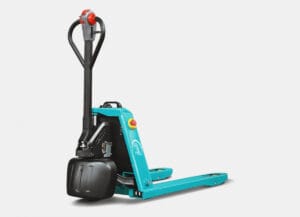
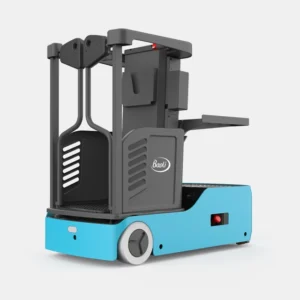
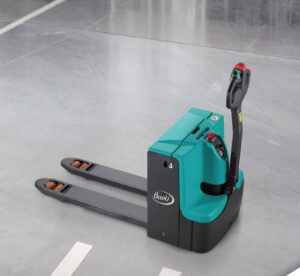
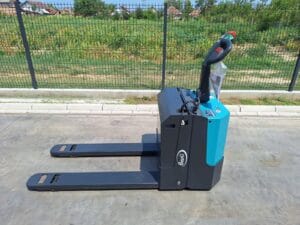
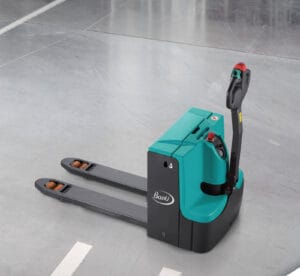
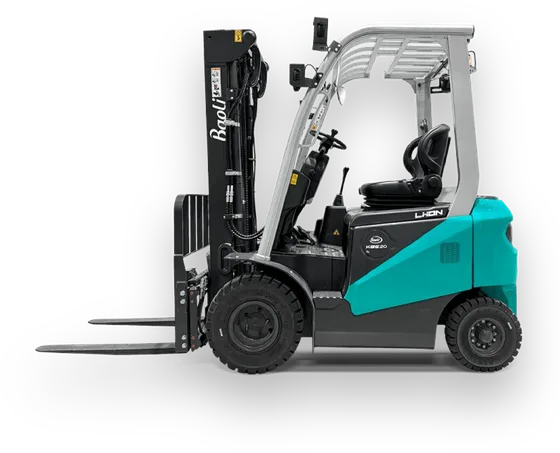
Forklift, electric pallet truck and stacker are the work equipment. They are not exempt because they are small, because they rarely work, or because they are used only by the owner.
Term: no later than three years
According to Article 9 of the Rulebook, periodic inspections and checks are carried out within the time limit set by the technical regulations, and at the latest within three years from the date of the previous review.
Two things that are most often misunderstood here:
- Three years is the upper limit, not the rule. If the technical regulation or the manufacturer’s instructions for a specific machine require a shorter deadline, the shorter deadline applies.
- The term runs from the previous review, not from the calendar year. If the examination was in March, the next one is no later than March of the third year — not until the end of that year.
In addition to the periodic inspection, the regulation also includes a preventive inspection — before the equipment is put into operation for the first time, as well as after reconstruction or relocation to a new place of use.
Who is allowed to perform the inspection?
Inspection and verification is carried out legal entity with a license for the performance of inspection and checking of work equipment, which has appropriate instruments and devices (Article 4 of the Rulebook).
This means that the inspection cannot be done by your service technician, no matter how good, or by the occupational health and safety person within the company, unless the company has the appropriate license. Before hiring, ask them to show you the license — it’s the cheapest check in the whole process.
Expert opinion and what if the machine falls
After the review, it is issued expert opinion, no later than within 30 days from the date of the inspection (Article 5 of the Rulebook).
If it is determined that safety measures have not been applied, the professional person is obliged to immediately inform the employer, place a sticker about the malfunction of the equipment and prohibit its use until the defects are eliminated. In that case, the machine stops — regardless of how much work there is that day.
Therefore, it is wise to schedule an inspection with a reserve, and not during the week when the machine has to work. And that’s why it makes sense to perform a major service before the inspection, and not after it.
Documentation to have
According to the machine, it is worth keeping in one place:
- expert report on the last inspection and check, with the date
- manufacturer’s instructions for use and maintenance
- declaration of conformity and technical documentation of the machine
- service book with records of performed services and reading of working hours
- evidence of operator training for safe work
- records of daily checks before the shift
This same kit is also the strongest argument in the price when you sell the machine one day — the buyer of a used machine first asks for the documentation. Look checklist for buying a used forklift.
How it looks in practice
A firm with three machines has, on average, three different last inspection dates because the machines were purchased at different times. The simplest solution is to write all the dates in one reminder with an alarm two months in advance — that’s enough time to schedule an inspection, perform a service before it and remove any findings.
Another step that is often forgotten is operator training. A correct machine and an untrained operator are still an incomplete story — we will write about who is allowed to operate a forklift and what training entails in the next article from this series.
We do service and maintenance, we do not issue expert opinions — for an inspection, contact a licensed house. If you want to get the machine in order before inspection, schedule a service or call 021/6040-505. You have the parts — chains, forks, hoses, filters — on the page spare parts.
Forklift service — Jović Viljuškari
Regular service, periodic inspection and repairs. Make an appointment or call us.
Note: this text is informative and does not constitute legal advice. Regulations change — before proceeding, check the current text of the regulations and consult an occupational health and safety officer or licensed legal entity.