In the text Used or new forklift we promised a checklist you can take on the tour. Here she is.
This is, with minor changes, the same list that our people go through before any machine even comes out of overhaul. There is nothing secret about it—but there is an order, and that is what makes it useful. Buyers who come to the lot usually look at the engine and tires, and the most expensive items on a used forklift are the forks, mast and battery.
Go through it in order. Any point left unanswered is not a reason to give up — but it is an item you factor into the price.
Content:
- Before the tour: three things you need to know on the phone
- 1–2. Hour meter and service history
- 3–6. Forks, mast, hydraulics, engine
- 7–8. Battery and charger
- 9–11. Tires, brakes, safety equipment
- 12. Paperwork and parts availability
- Test drive — mandatory with load
- How a find turns into a price
- Download the form
Before the tour: three things you need to know on the phone
Half the bad tours are avoided with one call. Before getting into the car, ask:
- How many hours does the counter show and does it work? If the answer is “I don’t know” or “the counter has been replaced”, you already know more than after an hour at the lot.
- What is the correct model number and year of manufacture? With that information, check parts availability before you go.
- Is there a report on the last periodic inspection? A forklift is work equipment and that inspection is mandatory — its absence speaks volumes about how the machine has been handled.
If all three answers exist, the tour makes sense. If none, you’re probably buying a machine with no history — which doesn’t have to be a deal breaker, but it does have to be in the price.
1–2. Hour meter and service history
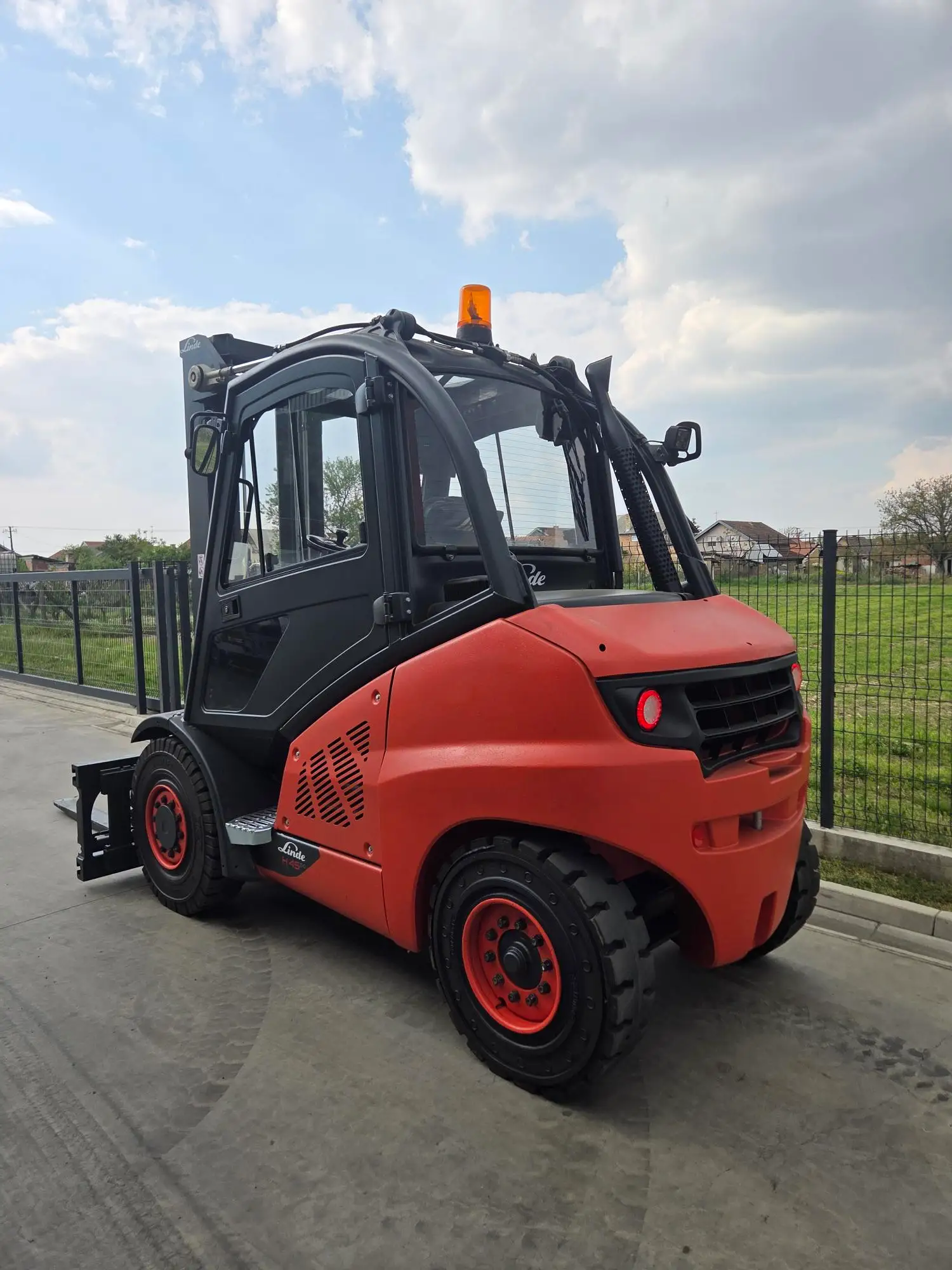
1. Counter of working hours. Hours are the mileage of the forklift. A guideline: a quality machine goes between 10,000 and 20,000 operating hours before overhaul becomes more expensive than replacement. A machine with 6,000 hours isn’t old — it’s half a century old. Check that the counter is working (turn on the key and watch the number move while the machine is running) and compare the state of the machine with the displayed number. A polished steering wheel and a punctured seat with 3,000 hours on the clock do not go together.
2. Service history and periodic inspection. You’re looking for papers, not stories. You are interested in when the oil and filters were changed, whether there were major interventions and when the last periodic inspection was performed. A machine from one company, with one operator and managed service, is worth more than the same machine without a single piece of paper — and that’s a difference that must be paid for.
3–6. Forks, mast, hydraulics, engine

3. Pitchfork — wear on the root. This is the point that customers often skip, and it is the most important in terms of safety. The pitches wear out invisibly, in the corner where the horizontal part turns into the vertical part. Compare the thickness at the root with the thickness at the tip: wear over ten percent means a villa replacement, not a repair. See that they are not bent either — place them on a flat floor and check that they both fit evenly.
4. Mast, chains and leaders. The chains must be equally tensioned; if one is visibly looser, the machine has been operating under an uneven load. Look for stretch links, rust and oil marks down the mast profile. Raise the empty forks to the top and watch for side swing — a lot of swing means worn rollers and guides.
5. Hydraulics. Inspect the hoses and fittings for wet marks and cracks, and the cylinders for scratches and leaks. A test worth more than watching: raise the pitchfork to the top and hold them for a minute. If they go down on their own, a valve or gasket is leaking. Do the same test with the tilt of the mast.
6. Motor or electric motor. Insist on starting the machine in the cold — a warm engine hides almost everything. With diesel, look at the color of the smoke: blue smoke means oil, white smoke means water, thick black smoke means incorrect injection. With electric machines, listen to the electric motor under load and watch for power loss when the battery is half empty.
7–8. Battery and charger
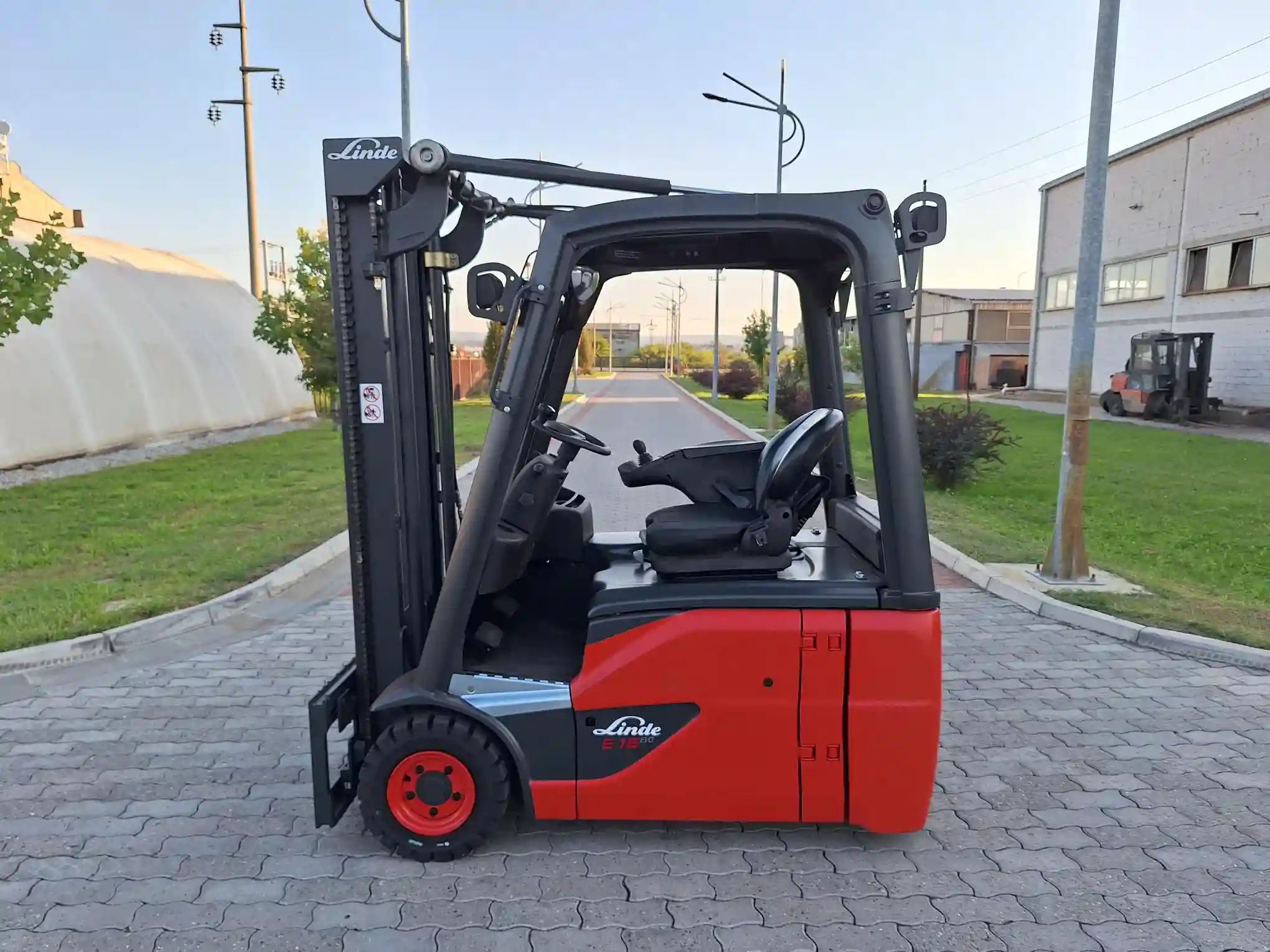
7. Battery. In a used electric machine, the battery is a separate machine within the machine, with its own lifetime of approximately 1,500 charge cycles — roughly five years of regular use. You are looking for three pieces of information: year of production from nameplate, number of cycles if the charger records it, i measured capacity after full charge. If there isn’t one, feel free to include a new battery in the price — and it costs a third of the machine’s value. You can find more about it on the page batteries for forklifts.
8. Charger and charging point. Check that the charger matches the battery in terms of voltage and type, and that the cable and plug are correct. The question that goes along with this is not about the machine but about you: do you have somewhere to charge it? Lead-acid batteries require a well-ventilated space, and for larger capacities, a suitable connection. This is handled before delivery, not after.
9–11. Tires, brakes, safety equipment
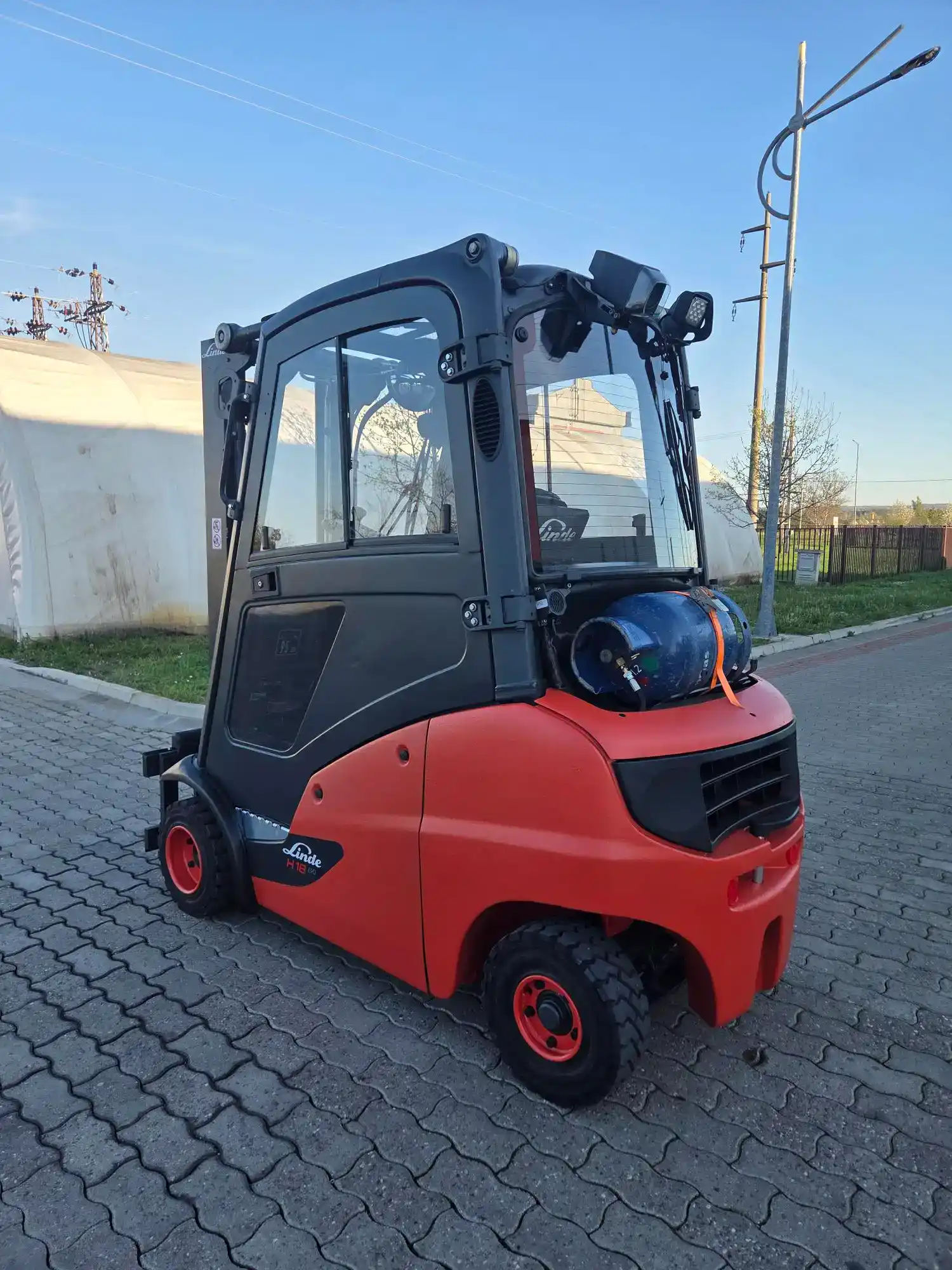
9. Tires. Take note type and exact dimension — you’ll need it when you’re looking for a replacement price. With solid tires, the limit is the wear mark on the sidewall; Cracks and missing pieces mean replacement. Unevenly worn tires are not only an expense, but also a symptom: they lead to poor geometry or to work with an excessive load. Dimensions and types are available on the page tires for forklifts.
10. Brakes and steering. Try the service and parking brakes on a slight incline. The steering wheel must not have a large gap; the machine must not pull to the side when braking. With power steering, listen to the pump — squealing at full turn is a sign that something is wrong.
11. Safety equipment. Protective roof without cracks and improvised welding, load backrest, correct belt, siren, lights, rotary light. This is the equipment that must be there for the machine to work at all — and the cheapest item to repair, but also the most common reason for a machine to fail inspection.
12. Paperwork and parts availability
12. Papers and parts. The serial number plate must be legible and must match the documentation. In addition, check what is not visible on the machine: who services that brand in Serbia and how long is the wait for the standard part. An affordable machine from a rare manufacturer can become expensive when waiting for a part that no one in the region has. With famous series it is not a question; with exotics it is.
Test drive — mandatory with load
Driving an empty car proves nothing. Look for a pallet that is close to your heaviest load and do four things:
- Raise the full load to full height and hold for a minute. You watch the decay of the mast and the uniformity of the lift.
- Drive forwards and backwards, then brake suddenly. You’re looking at lateral pull and brake response under load.
- Tilt the mast back and forth under load. No recoil, no decay.
- Try the side shifter and every port which goes with the machine. The non-working plug is included in the price.
If the seller won’t let you try the load, that’s the answer in itself.
How a find turns into a price
The point of the list is not to find the perfect machine — there are no used perfect machines. The point is yes you leave the salary knowing how much you will invest after the purchase.
Collect: tires, battery, forks, regular service that follows immediately. Add that sum to the asking price and only then compare it with other offers. Very often it turns out that the machine that is advertised for a thousand euros is actually cheaper, because it does not need a battery.
And one step further: when you have the actual price, divide it by the expected number of working hours and compare it to a new machine in the same way. We have described how it is done in the text How much does a forklift really cost.
Download the form
We’ve packed the entire list into a two-page form that you can print out and take with you: twelve bullet points with a find box, a test drive pad, and a post-purchase investment evaluation spreadsheet.
➜ Used Forklift Tour Checklist (PDF, 2 pages)
If you want us to look at the machine — whether it’s from our lot or not — tell us the model and number of hours. Ours used machines they go through exactly these checks before they come out of overhaul, and with each one you get information about the hours and condition without embellishment: electrical, diesel i on gas.
Send it request for quotation, call 021/6040-505 (Monday–Saturday, 7:00–15:00) or write to info@viljuskari-jovic.rs.
With a used machine, the warranty is expressly agreed upon and written down — it is not implied*. Prices are published in euros without VAT and refer to registered economic entities; payment is made in dinar equivalent at the middle exchange rate of the NBS on the day of payment.
* The guarantee is contracted in accordance with the valid laws of the Republic of Serbia.
Used forklifts in the offer
Look at the models we offer and choose the performance for your business.