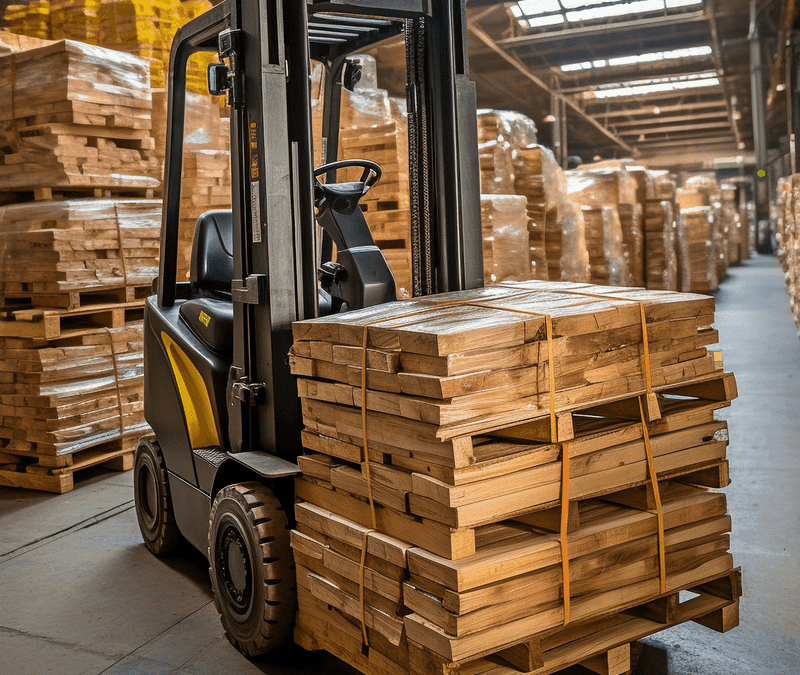
At the end of August, the rhythm changes in Vojvodina. The trucks stop coming on schedule and start coming when they do — often three at a time, often near the end of business hours. What was a peaceful reception of goods in June, turns into a line at the gate in September.
Interestingly, the cause is almost never the machine. The cause is organization: where is the scale, who records the weight, is there anyone to sign the receipt and is there a place for the pallet to be put down. This text is a checklist before rush hour begins — all items are handled in one day, and some in one afternoon.
Content:
- Where time is actually wasted
- Ramp: single flow, no crossing
- Measurement without downtime
- Papers that do not overtype
- Mechanization: what to check before rush hour
- Pre-Season Checklist
Where time is actually wasted
If you stand on the sidelines and measure what happens from the moment the truck stops to the moment it leaves, you will see that driving a forklift takes less time than expected. Time is spent waiting: to find someone to take over, to free up a place to lower the pallet, to get to the scale, to find a pen, to call someone who knows how to enter data into the program.
That’s why the first rule of preparation is not to “get a faster machine” but shorten the wait between steps. A machine moving at 4 km/h is not a bottleneck; the bottleneck is the pallet that is standing because it has nowhere to go down.
The second rule is that rush hour is not solved by improvisation during rush hour. Anything you haven’t solved by the first big day, you’ll solve ten times more expensively — in the middle of work, with a truck waiting.
Ramp: single flow, no crossing
The biggest gain comes from a simple thing: moving goods in one direction, without crossing with outgoing goods and without going back.
Practically this means three things. First, determine zone of temporary delay right next to the ramp — a place where a pallet can drop and wait without blocking the aisle. Rush hour without such a zone means that every pallet has to be immediately in its place, which slows down work twice.
Second, clear that zone before the truck arrives, not after. It sounds obvious, but this is where most mistakes are made.
Third, if possible, separate receiving and shipping — temporally if not spatially. Two forklifts passing each other in the same aisle spend more time yielding than driving.
Measurement without downtime
In redemption, almost everything that comes in is measured, and this is where the biggest loss is hidden. The classic setup looks like this: the pallet is removed from the truck, brought to the floor scale, lowered, waits for the reading, the weight is recorded, the pallet is lifted again and only then driven to the location.
Of those seven steps, only the first and last bring value. Analyzes of warehouse operations agree that such a separate trip to the scale adds on average about a minute and a half per palette. At sixty pallets a day, that’s an hour and a half — every day, while the season lasts.
There are three ways to shorten it, and they are worth considering in this order:
- Move the scale to the road you’re on anyway. The cheapest solution: if the scale is in the corner and the goods go the other way, each pallet makes an unnecessary circle.
- Measure in the truck or on the ramp, before the pallet enters the warehouse — thus avoiding double lifting.
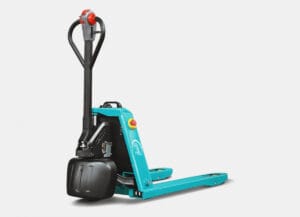
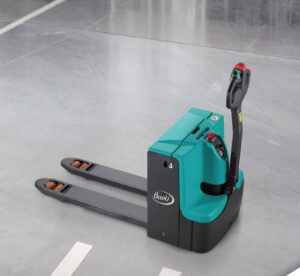
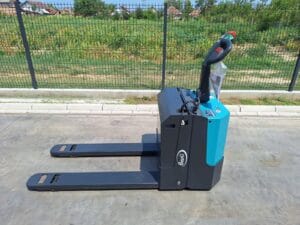
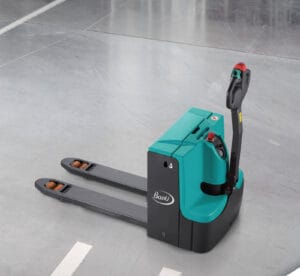
- Measure during transport. A pallet with a built-in scale measures while driving, so measuring ceases to be a separate step. We wrote about it in detail in the text about the model EPT20-15ET, which has a printer along with the scale, so the measurement confirmation is received immediately, along with the pallet.
Papers that do not overtype
Another silent loss is double data entry. The weight is first written down on paper, then in the evening it is typed into the program. Every transcription is an opportunity for error, and a weighting error is discovered where it hurts the most — on an invoice or in a dispute with a supplier.
The rule is simple: the data should be created where the burden is also created, at the man who handles goods. Whether it’s a printed slip from the scales, an entry over the phone or a tablet on the ramp — it’s important not to write the same number twice.
Before the season, check who can sign the receipt when the main man is away. A truck waiting for a signature costs the same as a truck waiting for a forklift.
Mechanization: what to check before rush hour

The machine doesn’t break down when there’s little work — it breaks down right at rush hour, because that’s when it works twice as hard. A week before the start of the season, it is worth going through a few items:
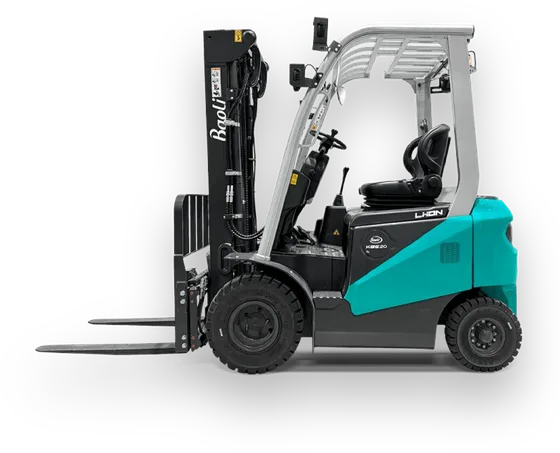
- Battery and charging. If the machine can’t withstand a full shift now, it certainly won’t in the season. Check how long it actually lasts on a single charge, and if there are places where it can be topped up during a break.
- Tires and wheels. Worn wheels on an uneven ramp waste time and break goods.
- Fairies. Bent or thinned forks are a safety risk and cause for rejection during inspection.
- Spare machine. If the process does not suffer a setback, the season is the only part of the year when a spare machine pays off — even if it’s a used one, even if it’s a rental one.
- Service. A regular service before the season is cheaper than an emergency intervention in the middle of it. Make an appointment here.
And one item that is often overlooked: documentation on periodic inspection of work equipment. If the review has expired, the season is the worst time to find out.
Pre-Season Checklist
Everything from the text, collected in one place:
| Ramp | The temporary storage zone is designated and empty before the truck arrives |
| Flow of goods | Reception and dispatch separated spatially or temporally |
| Measurement | Weighing on the road anyway — or measuring during transport |
| Data | Kilogram is entered once, at the place of origin |
| Powers | Designated Substitute for Signing Receipts |
| The machine | Battery, wheels and forks inspected; service done |
| Reserve | Spare machine provided or rental arranged |
| Papers | Periodic inspection of work equipment valid |
If during this list you conclude that you need a machine — either for the season or permanently — let us know how you receive it: how many pallets per day, how heavy, what kind of floor and whether it is measured. Based on that, we propose a solution, including the possibility rent only for the duration of the season, if the purchase does not make sense.
Write to info@viljuskari-jovic.rs, call 021/6040-505 (Monday–Saturday, 7:00–15:00) or send request for quotation. The offer of electric pallets is on the page Electric pallet trucks, and machines for more difficult conditions among forklifts.
The season won’t wait for you to get ready anyway. But unlike timing and pricing, this is the part of the business you can influence — and before the first truck pulls up to the gate.
Pallet trucks in the online store
Manual and electric pallet trucks with price, documentation and online ordering.