“We need something to lift the pallets.” Many of the conversations we have begin with that sentence. And almost always follows the same question from the other side: how hard, how high and how far?
Those three numbers decide almost everything. Between the cheapest hand pallet truck and a forklift, there is a price difference of several dozen times — and the error in the choice is not paid for once, but every working day: either in the time people lose, or in money that is locked in a machine that is stronger than the job requires.
This text is a guide through that choice. No recommendation to get the biggest you can — because that’s almost never the right answer.
Content:
- Three questions that decide
- Hand pallet truck: horizontal, up to 2.5 tons
- Electric pallet truck: when distance becomes a cost
- Stacker: the first machine that lifts to a height
- Front-end forklift: when nothing less will do
- Table: what which machine does
- The three most common mistakes when choosing
- How to decide in five minutes
Three questions that decide
Before you even look at the price list, answer three questions — and for the worst day of the month, not for the average.
1. How hard? Not how much the goods usually weigh, but what is the heaviest pallet that appears. If it is 900 kg in ninety percent of the cases, and once a week a pallet of 1,400 kg arrives — the machine is selected for that 1,400 kg.
2. How high? This is a question that divides the world. If the pallet is only lifted from the floor to be transported — you need a pallet truck. If it is placed on a rack, in a truck on the side or on another level — you need a stacker or forklift. There is no middle ground between the two.
3. How far and how many times? Thirty pallets per day on ten meters is one job. Thirty pallets a day on eighty meters is quite another — and that’s where a hand pallet truck stops being cheap, no matter how much it costs.
With those three numbers, the choice comes down to two or three machines. Without them, the choice is guesswork.
Hand pallet truck: horizontal, up to 2.5 tons

The hand pallet truck is the simplest machine in the warehouse and, in the right business, the most cost-effective thing you’ll buy. A hydraulic pump lifts the pallet a few centimeters off the floor — just enough to push.
What it does: it carries up to 2,500 kg, lifts about 200 mm, goes anywhere a pallet goes.
When it’s the right choice: short distances, flat floor, up to several tens of pallets per day, and no height lifting. Shops, smaller warehouses, unloading on the ground floor, auxiliary machine next to the larger one.
When it’s not: as soon as there is a ramp, uneven concrete, a long distance or more than a hundred pallets per day. Then what you save on the price, you pay for in fatigue and people’s time — and that item never goes on the invoice, so it is easily overlooked.
We have an offer of hand pallet trucks on the page hand pallet trucks, and we processed the models with built-in scales separately — because a pallet picker who measures on the way can replace a trip to the midday scale.
Electric pallet truck: when distance becomes a cost

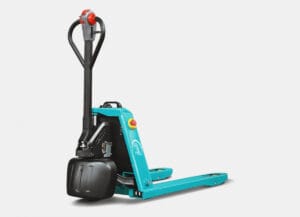
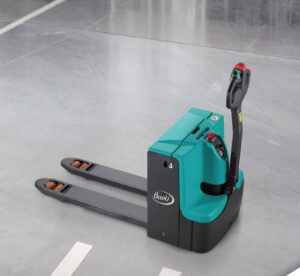
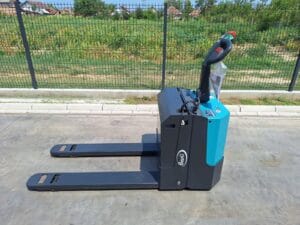
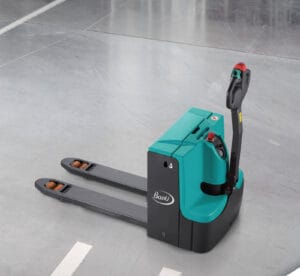
An electric pallet truck does the same job as a manual one — it carries horizontally — but it’s powered by an electric motor. The difference in price is significant, so the question is when it returns.
The answer is in the distance multiplied by the number of pallets. When a worker walks several kilometers a day pushing a load, you don’t buy an electric pallet truck for convenience — you buy it because the same person does twice as much in the same amount of time. In addition, back injuries, which are the most expensive “invisible” expense in the warehouse, also disappear.
When it’s the right choice: longer distances inside the hall, unloading trucks from the ramp, working in multiple shifts, and everywhere where the same person is on the pallet all day.
When it’s not: if the pallet is lifted onto the rack. The electric pallet truck still only lifts a few centimeters — the motor changes the drive, not the height.
You can see the program on the pages electric pallet trucks i electric pallet trucks, and the model is currently in action Baoli EP 15-03.
Stacker: the first machine that lifts to a height

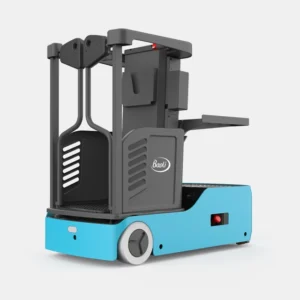
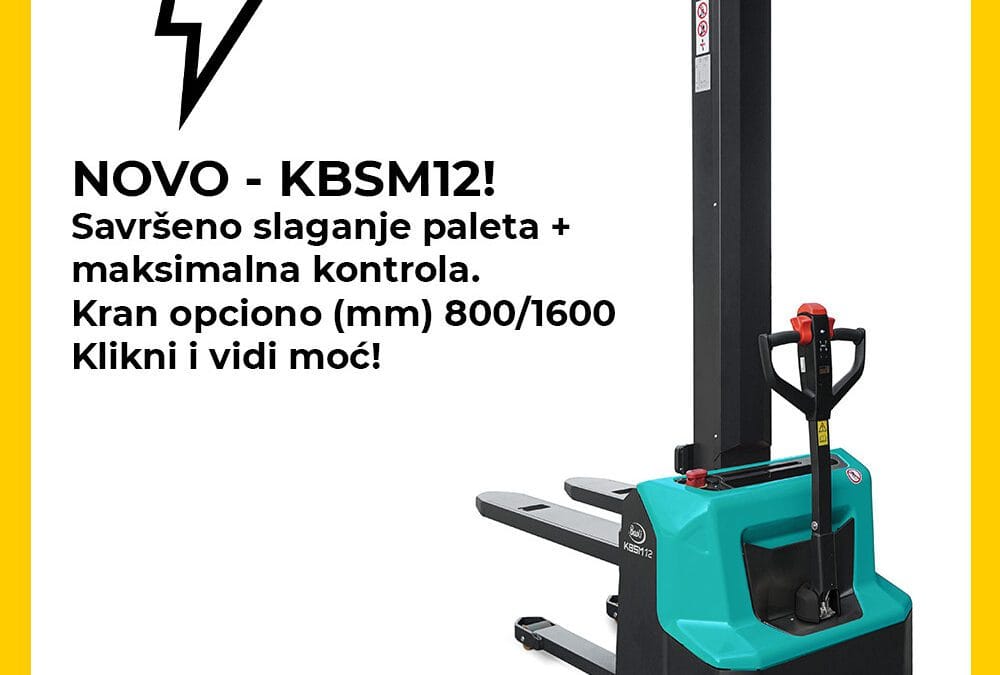
The stacker is the machine that is most often overlooked, and is most often the correct answer. It looks like an electric pallet truck with a mast — and that’s exactly what it is.
What it does: it usually carries 1,000 to 2,000 kg and lifts to heights of about 1.6 to over 5 meters, depending on the model. The operator walks next to the machine or stands on the platform.
Why it is often better than a forklift: it’s narrower, shorter, cheaper to purchase and maintain, doesn’t need the same turning space as a front-end forklift, and doesn’t require the same infrastructure. If you’re lifting pallets onto a rack in a hall with narrow aisles, and you don’t need to work outside — a stacker is probably doing all the work for you.
When it is not enough: heavy loads over two tons, high heights with a full load, working in open and rough terrain, or when the operator has to drive long distances while sitting.
See the models on the page electric stackers.
Front-end forklift: when nothing less will do
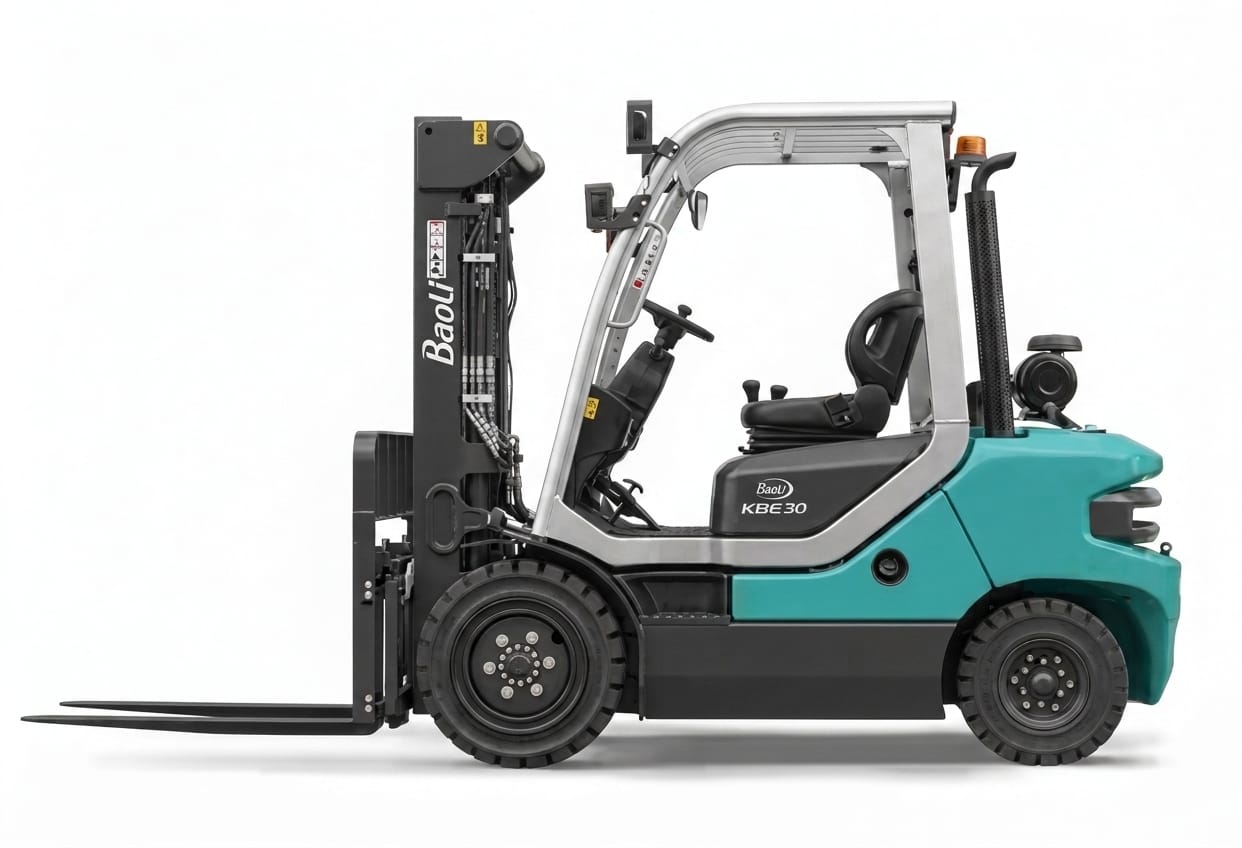
The front loader is the most expensive and most capable machine in this range. It is taken when the job really requires what only it can do.
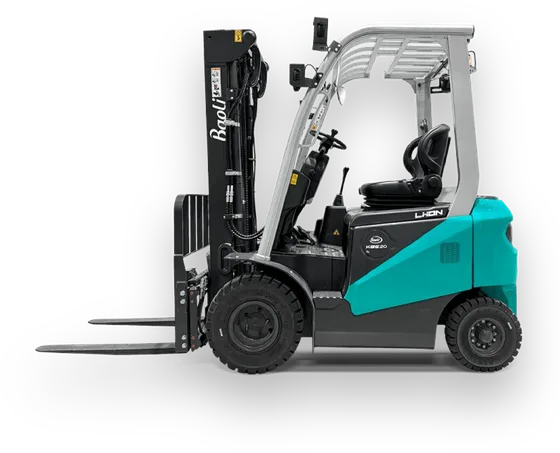
When it’s the right choice: loads over two tons, open lot work, rough terrain, unloading trucks from the ground, higher heights with full loads, and all-day work — because the operator is sitting, not walking.
Within that category, the selection goes further: electric forklifts for working indoors, without exhaust gases and with less noise; diesel and LPG forklifts for parking, heavy loads and operation without a refueling break. If the passages are narrow, there is also an intermediate solution — three-wheelers reach trucks made just for such warehouses.
And one more thing: when the budget does not follow the need, used machine is often a better choice than a new lower class machine. Better a real machine with 6,000 hours than a new one that can’t do the job.
Table: what which machine does
| The machine | Carrying capacity | Lifting height | Typical job |
| Hand pallet truck | up to 2,500 kg | ~200 mm | short distances, flat floor |
| Electro paletter | 1,500–3,000 kg | ~200 mm | long distances, more shifts |
| Stacker | 1,000–2,000 kg | 1,6–5,4 m | racks in the hall, narrow passages |
| Front loader | 1,500 kg and more | 3–7 m and more | lot, trucks, heavy loads |
The values are indicative and depend on the specific model and configuration. The same rule applies to any lifting machine: load capacity decreases with lift height, so the final choice is always checked through the load diagram.
The three most common mistakes when choosing
The first is a “just in case” purchase. A machine larger than the job requires costs more to acquire, consumes more, is more difficult to maneuver in your space and depreciates more slowly. “To have a reserve” sounds reasonable, but the reserve is paid every day.
The second is neglect of space. A machine that fits in terms of load capacity and height knows how not to fit in your passage. Before you buy, measure the aisle width, door height and ceiling height — and compare to the machine’s working radius, not just its width.
The third — forgetting about infrastructure. The electric machine is looking for a place to charge and, for larger batteries, a suitable connection. A diesel engine requires fuel and ventilation if it enters the hall. These are decisions made before purchase, not after delivery.
How to decide in five minutes
Go back to the three numbers from the beginning: the heaviest pallet, the highest height, the longest route times the number of pallets per day. Then:
- It does not rise in height, short distances → hand pallet truck
- Does not rise in height, long distances or multiple shifts → electro pallet truck
- It is lifted onto a rack in the hall, up to two tons → stacker
- Over two tons, work outside or at greater heights → front loader
If your case is right on the borderline between the two categories — and that’s where most are — send us those three numbers and we’ll suggest a machine. We often suggest a cheaper one than the one you came for, because we have no interest in selling you a machine that will annoy you.
Fill in the brief forklift truck selection questionnaire, send it request for quotation, call 021/6040-505 (Monday–Saturday, 7:00–15:00) or write to info@viljuskari-jovic.rs.
Prices are published in euros without VAT and refer to registered economic entities; payment is made in dinar equivalent at the middle exchange rate of the NBS on the day of payment. It goes with new machines guarantee for legal entities lasting 12 months*.
* The guarantee is contracted in accordance with the valid laws of the Republic of Serbia.
Pallet trucks in the online store
Manual and electric pallet trucks with price, documentation and online ordering.