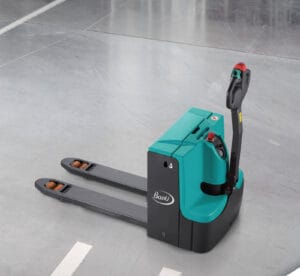
It's Friday afternoon, the truck is late, and then suddenly it arrives: twenty pallets on the ramp. The pallet picker removes them one by one, but the real commotion occurs three meters away — in front of the floor scale. Each pallet is lowered, read, the weight is written down with a pen on paper, the pallet is raised again and only then driven to its place. By the end of unloading, the line in front of the scales is longer than the line in front of the ramp, and in the evening someone types the same numbers into the table — and sometimes misses a number.
This scene is repeated in warehouses all over Serbia, not because someone is doing something wrong, but because the equipment divides one job into two. Electro paletter EPT20-15ET with built-in weight indicator and printer returns that work in one step: weigh the load while transporting it and print a receipt on the spot. Below — what exactly you get, what analysis of warehouse operations and a calculation that shows how many hours per month actually return, say about this way of working.
Content:
- Goods receipt: a bottleneck that is not visible in the reports
- The "2-in-1" solution: scale and printer built into the pallet
- Meet the EPT20-15ET: the proven 1,500 kg platform
- Curtis Controller: Electronics Every Repairman Knows
- Integrated charger: an ordinary 230 V socket is sufficient
- Compact and agile: it also works inside a truck trailer
- Who does EPT20-15ET benefit the most?
- Technical specifications
- Price, warranty and service: how to get an offer
Goods receipt: a bottleneck that is not visible in the reports
When the reception of goods is observed from the outside, everything seems to be in order: the truck is unloaded, the goods are on the racks, the papers are filled out. But if we break down the path of a pallet from the truck to the rack, in the classic setup it looks like this: the pallet is removed from the truck, brought to the floor scale, lowered, waits for the reading, the weight is recorded, the pallet is lifted again and only then driven to the location. Of the seven steps, only the first and last add value — everything in between is pure operational friction.
How much does that friction cost? Analyzes of warehouse operations surprisingly agree on the figure: a separate trip to the scale adds up to the average about a minute and a half per palette. The European manufacturer of mobile measuring systems RAVAS calculates that a plant that measures only four pallets per hour loses about 200 working hours a year in this way, and analyzes of larger operations, with 200 pallet movements per day, add up to five hours of lost work every day. Translated into a domestic, medium warehouse: if you receive 60 pallets a day, a minute and a half per pallet is an hour and a half a day — over 30 working hours per month, as if one worker spends four full working days every month just driving pallets to the scale and back.
There are also costs that are less often calculated. A floor scale with mandatory access tracks takes up to 20 m² of warehouse space — space that you pay for and heat, but from which you do not deliver anything. And manually writing down the weight and then typing it into the computer means that the same data goes through the hands twice: every copy is an opportunity for error, and as a rule, a mistake in the weight is only discovered where it hurts the most - on the invoice, the list or the customer's complaint.
The "2-in-1" solution: scale and printer built into the pallet
The idea of mobile measurement is so simple that one wonders why every machine is not like that: if every pallet is lifted anyway to be transported, it should be measured in the same movement. With the EPT20-15ET, you slide the fork under the pallet, lift it up — and the weight is already on the display, while the load travels to its location. No detours to the scale, no waiting in line, no second drop off and pick up.
The printer is the other half of the solution, and according to the experience of users of such systems, it is often more important. Instead of writing down and retyping, a sheet with measured values and measurement data is printed on the spot; the slip is attached to the receipt or delivery note and the documentation is closed immediately. The data is created where the burden is also created — with the operator — and this, analysts note, improves the accuracy of the records the most: any error is noticed and corrected immediately, at the place where the correction is the cheapest. Mobile scales of this class measure with an accuracy of ±0.1–0.2%, which is quite sufficient for receiving control, internal records and checking the declared weight of the shipment.
It is also interesting where the industry is going: world logistics portals note that the wave of automation in 2026 will move precisely to the receipt of goods — to the capture of accurate data in real time, at the moment when the goods enter the facility. The good news is that neither robots nor large investments are required for this step: a pallet truck that measures and prints is the simplest and most affordable form of the same idea. And a little thing that is not: one machine instead of two means one maintenance, one service and one point of possible failure — instead of scales and pallets that break down individually.
Meet the EPT20-15ET: the proven 1,500 kg platform
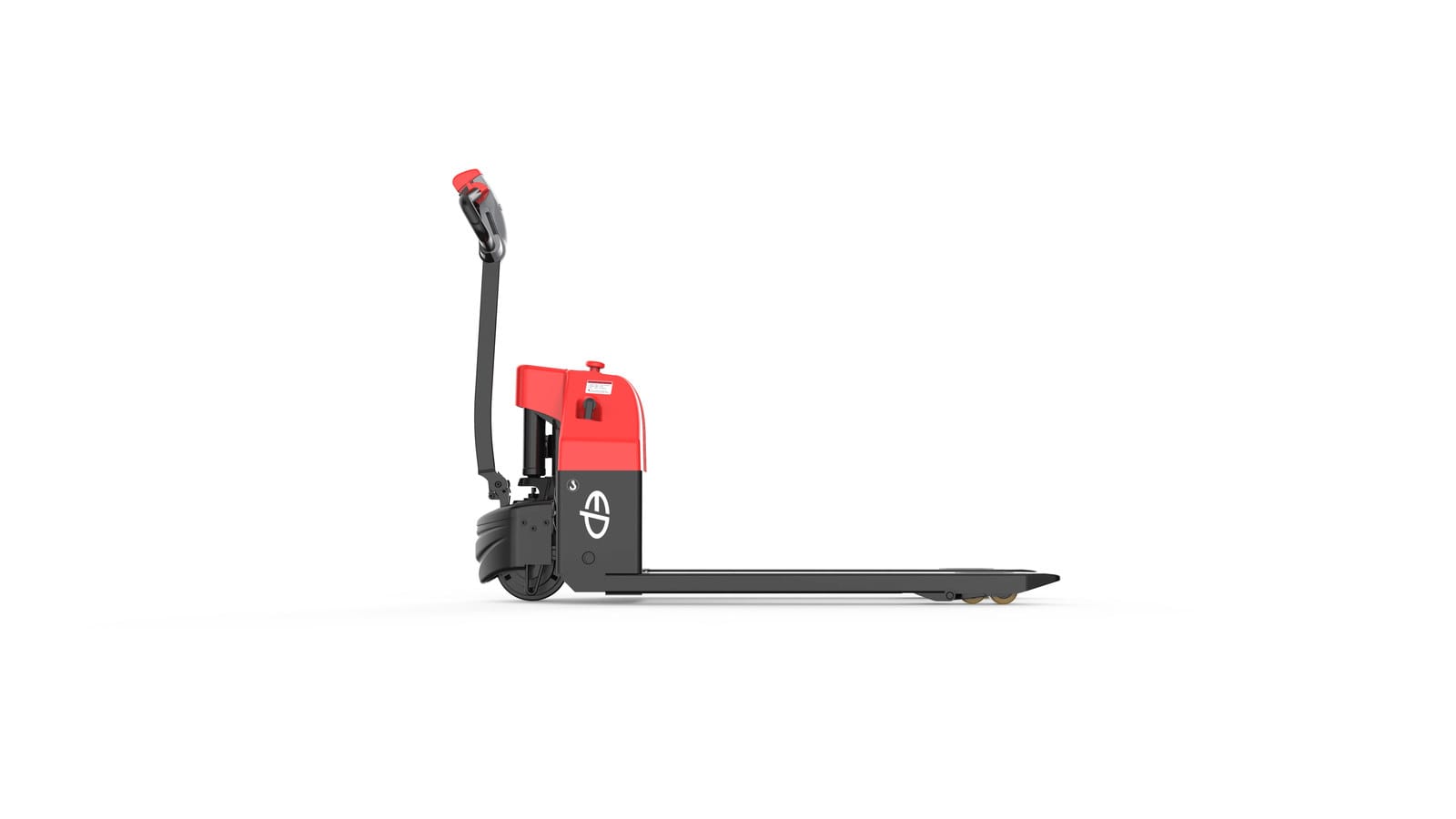
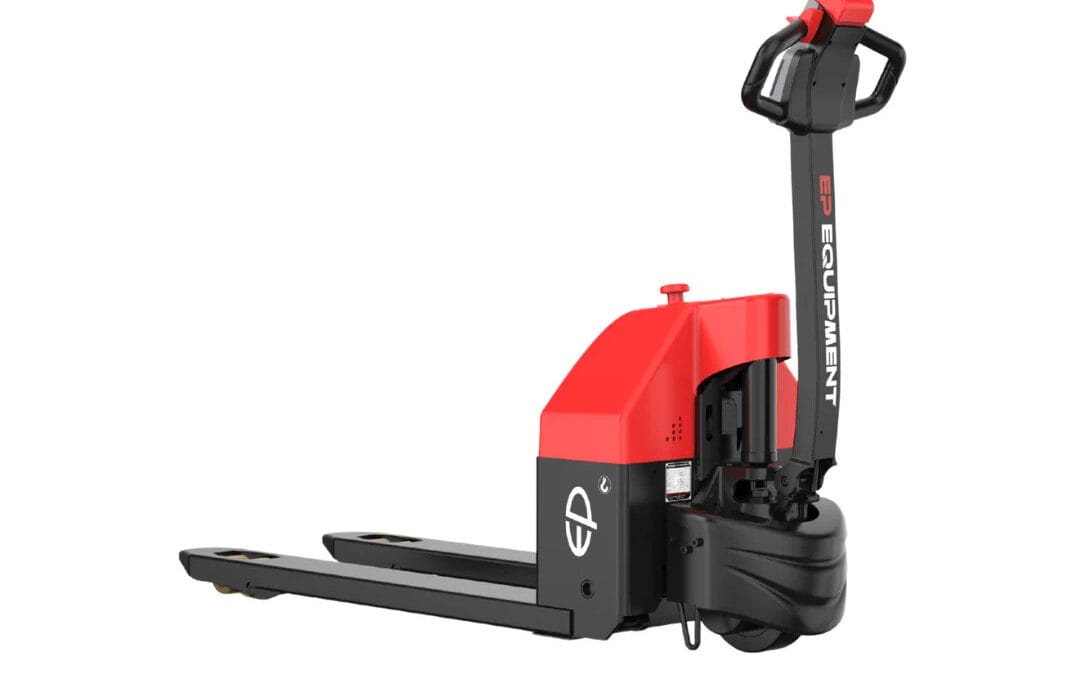
EPT20-15ET comes from the factory of EP Equipment, one of the world's largest manufacturers of electric equipment for internal transport, with more than a million machines delivered — and the design of this series also won the prestigious Red Dot award. In other words, this is not an experiment, but a platform that has been produced in huge series for years, which is reflected in both the price and the availability of spare parts.
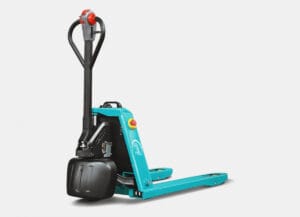
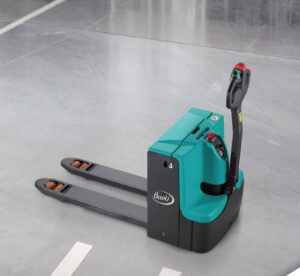
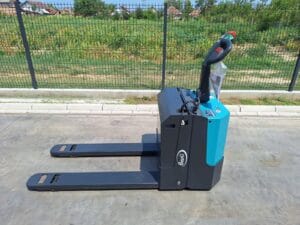
The basic calculation is simple: load capacity of 1,500 kg with a load center at 600 mm, it covers practically everything that fits on a euro pallet in domestic practice. The 1,150 x 540 mm villas are cut exactly to her measurements; lowered to only 80 mm, they easily enter the pallet opening, and the 115 mm lift provides enough clearance for safe transport over thresholds and ramps. Control is by walkie: the operator walks alongside the machine and guides it with an ergonomic handle, so training new people is fast and simple. Our version comes factory-equipped with a load weight indicator and printer — so it's an all-in-one solution, not a retrofit.
Curtis Controller: Electronics Every Repairman Knows
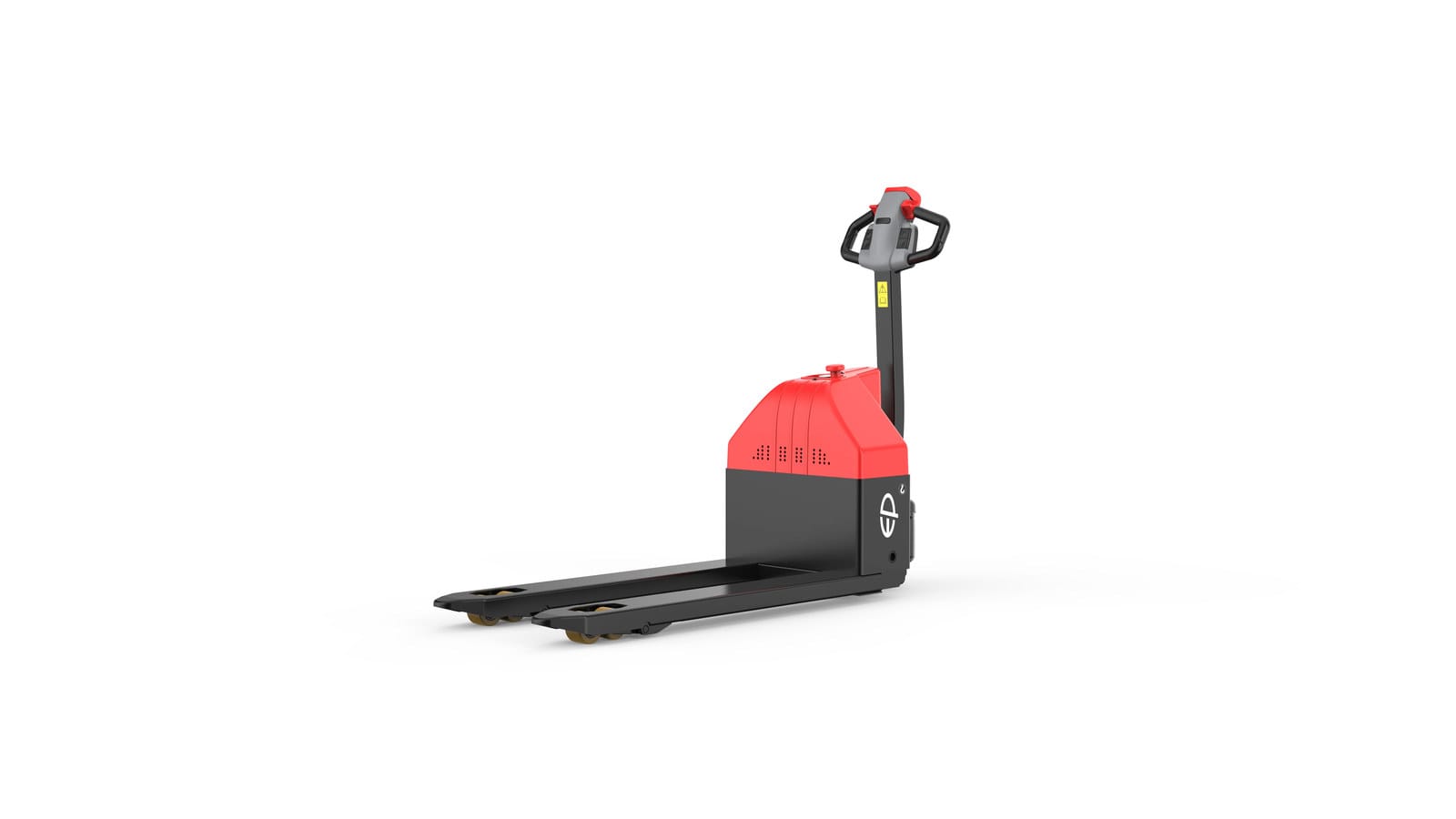
The heart of the electric pallet is not the motor, but the controller — the electronics that turn the movement of the handle into smooth acceleration, deceleration and precise maneuvering. The EPT20-15ET uses a direct current (DC) drive controlled by a controller from the American company Curtis, which has been producing electronics for industrial vehicles for decades and whose modules are installed by the world's most expensive forklift brands.
For the customer, this means three things. First, the predictable behavior: the speed is finely dosed up to 4 km/h with a load, or 4.5 km/h without it — the pace of a leisurely walk, safe among people and shelves. Second, the reliability of the solution, which is an industry standard: Curtis electronics is known by every serious repairer of electric forklifts, diagnostics are standardized, and parts are not waiting for months. And thirdly, long-term investment security — the machine does not depend on exotic electronics that no one will be able to fix tomorrow.
The controller is accompanied by an electromagnetic brake that holds the machine as soon as the handle is released, including stopping on the slope of the ramp. The construction is designed for quick maintenance — modular assemblies, and the wheels are changed by unscrewing only six nuts. Polyurethane wheels are silent and do not leave marks on the floor, which is taken for granted in food and retail stores.
Integrated charger: an ordinary 230 V socket is sufficient
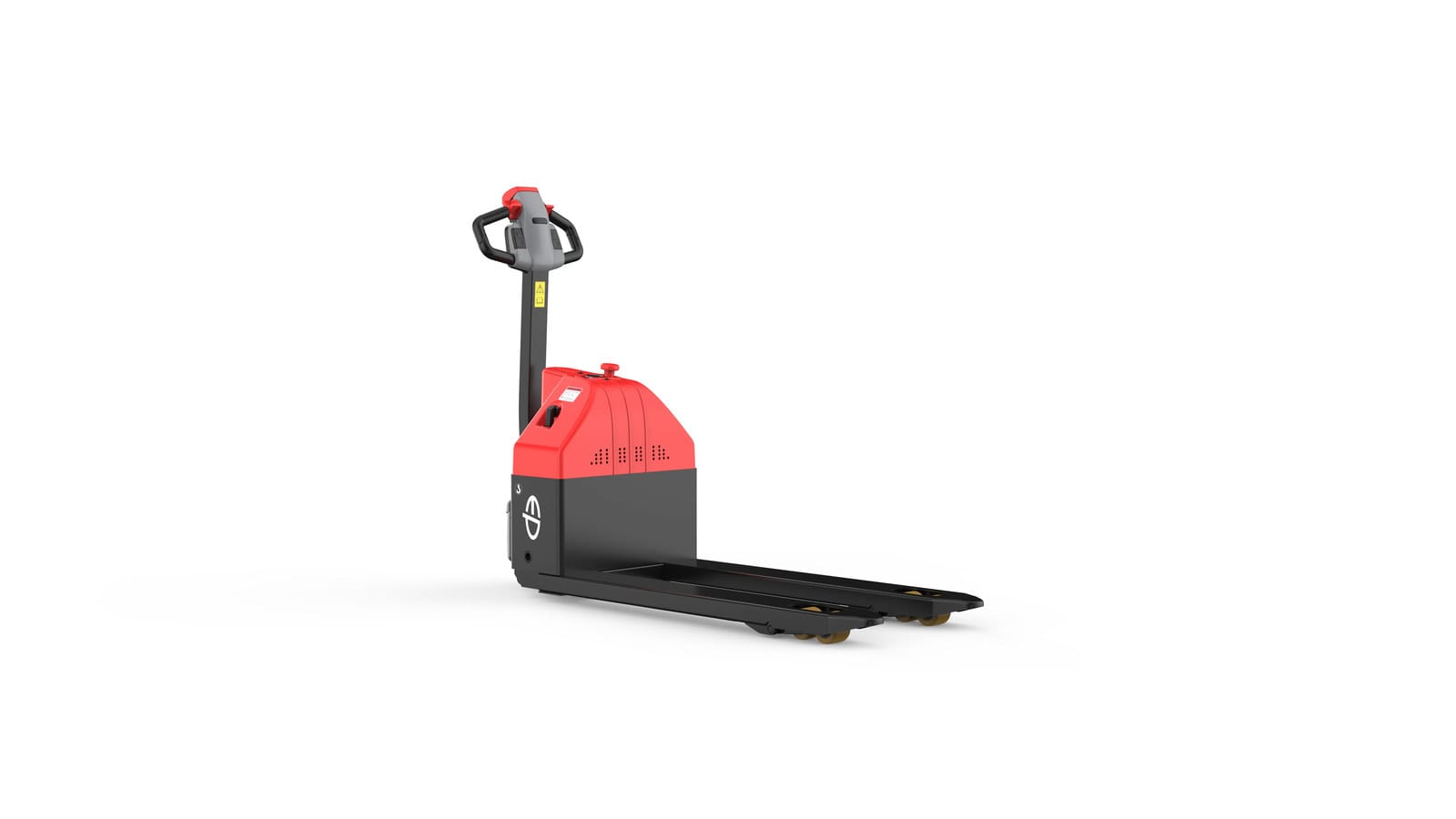
With many electric machines, the hidden cost is the charging infrastructure. There is none here: the EPT20-15ET carries a battery of 24 V / 85 Ah and its own built-in 10 A charger, so a regular 230 V outlet is enough to recharge it — the same one you plug your coffee machine into. Cable from the machine, to the wall, done.
In practice, it changes the way of thinking about autonomy. Instead of one big loading session in a separate room, the pallet is replenished along the way: during a break, between two trucks, overnight in a corner of the warehouse. The manufacturer has also incorporated anti-vibration protection into the series, which protects the battery on uneven floors and thresholds of ramps. And since the charger always travels with the machine, the EPT20-15ET is sent out into the field without a second thought — to the customer's facility, to a temporary location, anywhere there's a wall outlet.
Compact and agile: it also works inside a truck trailer
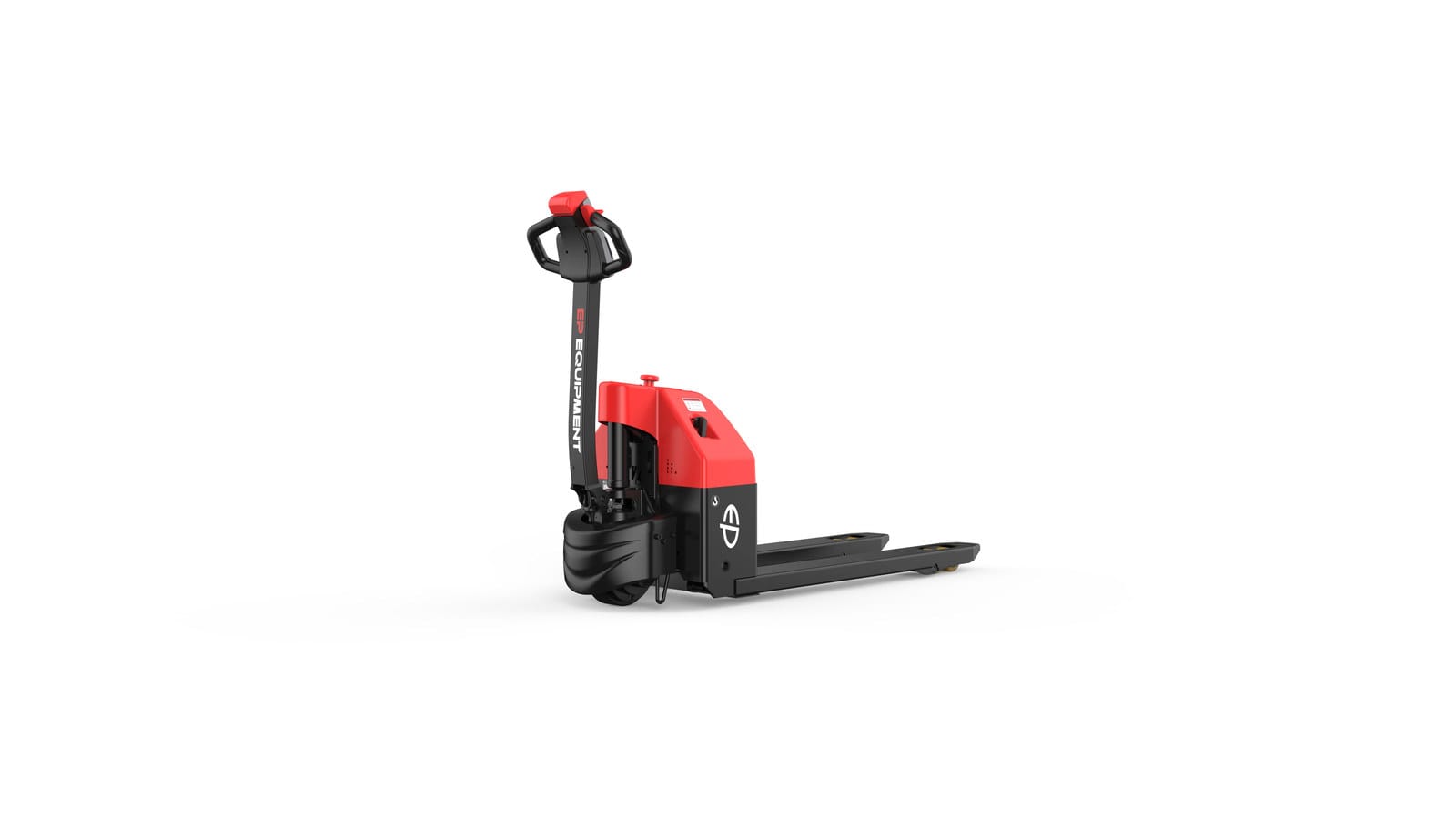
With the working weight of everything 210 kg and a turning radius of 1,485 mm, the EPT20-15ET is an extremely compact and light machine for its payload. These are not statistics for the catalog, but everyday practicality: the pallet picker enters directly into the truck trailer and delivers the pallets in the cargo area itself, turns around in the narrow aisles between the racks, gets into the freight elevator and does not cause a problem on the loading ramps. The low weight protects floors and ramps, and the machine is easy to take to the field with a vehicle.
For warehouses that today work with hand pallet trucks, this is the most painless entry into electrification: the same dimensions of the work, the same aisles — only without pushing tons and tons of goods with your muscles, and with the weight that is registered by itself.
Who does EPT20-15ET benefit the most?
The shortest answer: to anyone who measures and transports goods, and today they do it in two separate steps.
- Purchase of raw materials and secondary raw materials — each incoming pallet is measured the moment it is picked up, with a printed slip attached to the receipt document. Fewer delays at the gate and fewer arguments about weight with suppliers.
- Food industry and cold stores — receiving control of each delivery, checking the declared mass and orderly records by batch, without pulling pallets from the cold chain to a remote scale.
- Wholesale and distribution centers — faster reception in rush hours, more accurate lists and control measurement of outgoing shipments before loading, so transport bills do not bring surprises.
- Production — measurement of incoming raw materials and intermediate quantities at the point of consumption, with a paper trail for internal traceability.
Technical specifications
All key figures in one place:
| Model | EPT20-15ET with load weight indicator and printer |
| Carrying capacity | 1,500 kg |
| Load center | 600 mm |
| Battery | 24 V / 85 Ah |
| Charger | integrated, 10 A — standard socket 230 V |
| Drive and control | DC with Curtis controller, walkie |
| Villa dimensions | 1,150 × 540 mm (for euro pallets) |
| Height of lowered villas | 80 mm |
| Lifting height | 115 mm |
| Working weight | 210 kg |
| Turning radius | 1,485 mm |
| Movement speed | 4 / 4.5 km/h (with load / without load) |
| Wheels | polyurethane |
| Brake | electromagnetic |
You can see the model with photos and the complete range of electric pallets on the page Electric pallet trucks.
Price, warranty and service: how to get an offer
EPT20-15ET with load weight indicator and printer costs €2,400 + VAT. The stated price is without VAT and refers to registered economic entities; payment is made in dinar equivalent at the middle exchange rate of the NBS on the day of payment.
It goes with the machine guarantee for legal entities lasting 12 months*, and behind it what buyers of equipment in Serbia often value the most: security service and spare parts — a pallet maker who makes money can't stand still for long.
Finally, let's go back to the calculation from the beginning. If your reception today wastes a minute and a half per pallet on separate weighing, the machine that erases that minute and a half gives back — at 60 pallets a day — over 30 man-hours a month. In addition, there is a record without overwriting, a printed confirmation with each pallet and up to 20 m² of floor space that the floor scale no longer has to occupy. There are few investments in warehouse equipment that directly translate into time savings like this.
For an official offer with delivery time and payment terms, please send request for quotation, call us at 021/6040-505 (Monday–Saturday, 7:00–15:00) or write to info@viljuskari-jovic.rs. And if there's still a line waiting in front of the scale in your warehouse — it's time to put the scale on wheels.
* The guarantee is contracted in accordance with the valid laws of the Republic of Serbia.
Baoli electric pallet trucks on offer
Look at the models we offer and choose the performance for your business.