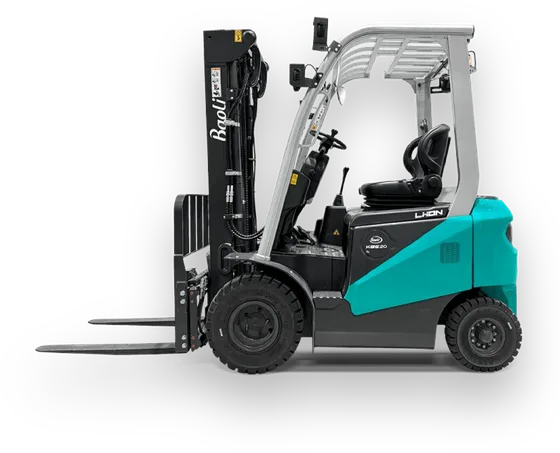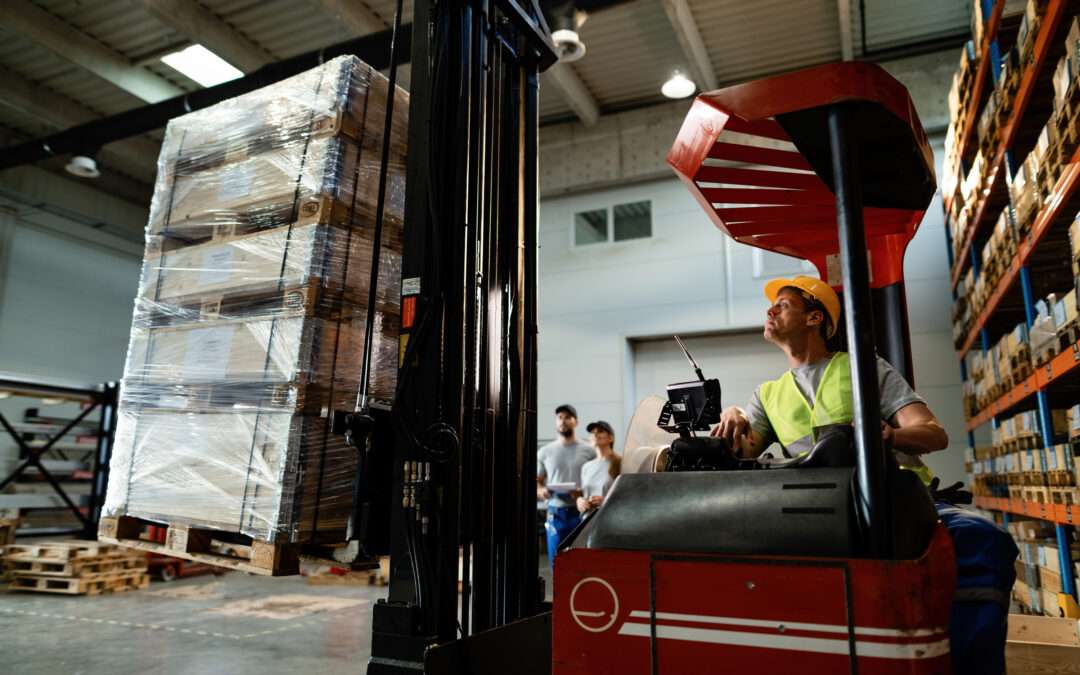
Welcome to the fascinating world of efficient logistics, where every movement counts, and speed and precision are key factors. We'll dive deep into the strategies that make up the core of warehouse optimization. The central focus is pallet stacking, which is a vital process and its proper management is essential for flawless distribution. Sail with us into the world of technological innovation and smart solutions, exploring how modern forklifts become key partners in achieving efficiency. Discover how these powerful devices integrate into logistics flows, providing not only faster, but also more intelligent pallet stacking. We are ready to take you on a journey where efficiency meets innovation – welcome to the world of forklifts in action!
The role of forklifts in efficient stacking of pallets
Forklifts are key actors in the process of efficient stacking of pallets, providing the necessary support in the manipulation and transportation of various products. Their role not only speeds up the process, but also contributes to the accuracy and safety of warehouse operations.
One of the key functions of a forklift in stacking pallets is to lift and place products in the appropriate positions. Forklifts equipped with appropriate forks and gripping systems enable precise placement of products on the pallet, without damage or loss of value. This precision is critical to maintaining product integrity during storage and transportation.
In addition, forklifts provide mobility and accessibility to the warehouse, which is essential for efficient pallet stacking. With their ability to maneuver through narrow aisles and reach high shelves, forklifts enable the optimization of storage space. This feature is especially important in environments where space is a precious resource.
Forklifts also play a key role in the process loading and unloading pallets from the vehicle. Their strong lifting power enables efficient moving of products from the warehouse to the means of transport and vice versa. Fast and precise manipulation of pallets it reduces downtime, improves workflows and contributes to the overall efficiency of logistics operations.
In addition, modern forklifts are equipped with technological innovations such as automatic driving systems and obstacle detection sensors. These additional devices further optimize the performance of forklifts, increasing their accuracy and safety.
Therefore, forklifts represent an irreplaceable part of the process of efficient stacking of pallets. Their multifunctionality, from lifting to transfer, contributes to increasing the speed, accuracy and safety of warehouse operations. The introduction of modern forklifts with advanced technological solutions represents a key investment for companies striving to optimize logistics processes.
Modern forklifts: Technology for more efficient logistics
In the modern context, forklifts represent a key link in the logistics chain process, and the application of advanced technologies further improves their efficiency. Modern forklifts, equipped with technological innovations, provide numerous advantages that optimize logistics operations, increase accuracy and enable a high degree of flexibility.
One of the key technological innovations that improves modern forklifts is the introduction of an automatic guidance system (AGV). AGV systems allow forklifts to move autonomously along pre-defined routes, which reduces the need for manual control. This autonomy not only speeds up processes but also optimizes workforce utilization, allowing staff to focus on more complex tasks.
RFID integration (Radio-Frequency Identification) technology represents another important element in the modernization of forklifts. This technology enables automatic tracking of pallets and products in the warehouse, thereby increasing inventory accuracy and facilitating tracking of product locations. RFID technology also contributes to the reduction of product handling errors, thereby increasing the level of precision in logistics operations.
Smart forklifts are equipped with sensors and cameras that provide real-time information about the environment. These devices help in precise maneuvering of the forklift, reducing the risk of product or equipment damage. They also allow operators to better control their environment, thus increasing handling safety.
Modern forklifts often include smart screens and interfaces that make them easier to operate. These interfaces provide operators with quick and easy access to information about products, pallets and movement routes. This reduces the time needed to train new operators and contributes to more efficient work.
Modern forklifts represent a technologically advanced tool in the logistics arsenal of companies. AGV systems, RFID technology, smart sensors and interfaces provide effective tools to optimize processes, improve accuracy and improve safety in the warehouse.
Optimization of the pallet stacking process
Optimizing the pallet stacking process is key to efficient warehouse management and fast product distribution. In this segment, we explore specific strategies that lead to improved productivity and reduced operating costs.
- Space analysis:
Studying available space to accurately determine storage dimensions and capabilities. Safety measures and regulations should also be considered.
- Consideration of product needs:
Identifying the types of products to be stored. Different products require different storage conditions and handling strategies.
- Pallet layout planning:
Placement of racks in certain zones according to the type of product. Consider strategies like block storage to get product out faster and reduce handling time.
- Polycentric approach:
Consideration of polycentric storage systems, where similar products are grouped at specific points within the warehouse. This reduces forklift paths and increases efficiency.
- Defining work zones:
Determining specific zones for different types of work. For example, separate areas for receiving, packing, and shipping, thus reducing confusion and speeding up the process.
- Vertical storage:
If possible, consider placing pallets high up along the wall to take advantage of storage height. This increases the storage capacity without increasing the space requirement.
- Monitoring and adjustment system:
Implementation of inventory tracking system and warehouse efficiency monitoring. Regular adjustment of the schedule according to changes in needs and types of products.
The implementation of these processes enables warehouse organization that is adapted to the specifics of your business, reduces downtime and optimizes pallet stacking processes, contributing to the overall efficiency of logistics operations.
Pallet stacking techniques
Efficient stacking of pallets plays a key role in optimizing warehouse operations. Different pallet stacking techniques provide specific advantages in speed, accuracy and maximization of storage space.
Stacking pallets in blocks is one of the frequently used techniques in warehouses with a large volume of products of the same type. This technique involves grouping similar products together on a pallet, facilitating fast and accurate deliveries. Block stacking is particularly useful for products that are often sold together or are intended for shared use.
On the other hand, spiral stacking of pallets refers to placing products in the form of a spiral on a pallet. This technique is often used to store products of different sizes, shapes and weights. Spiral stacking allows easy access to each product on the pallet, minimizing the risk of damage and facilitating inventory.
Pyramid stacking of pallets, the third technique we are considering, involves placing the product in the form of a pyramid on the pallet. This technique is especially useful when you have products of different sizes, and you want to maximize the amount of product on each pallet. Pyramidal stacking allows for even weight distribution, reducing the risk of tipping over and ensuring pallet stability.
Choosing the appropriate pallet stacking technique depends on the specifics of the product, storage space and logistics goals. Block stacking provides efficiency for homogeneous products, spiral stacking is ideal for diverse products, while pyramid stacking allows maximum utilization of storage space. Proper understanding and application of these techniques contribute to increasing the efficiency of warehouse operations.
How to safely stack pallets?
Even distribution is very important for the safe stacking of pallets with the help of a forklift. This reduces the risk of pallets shifting or tipping over. Even stacking also allows for more efficient use of space, ensuring maximum utilization of every square meter of space.
Start by placing the largest pallet on the bottom. It is best to stack pallets of the same shape and size, as it reduces the chances of the pallets moving or falling. Always make sure that double stacked pallets are the same width. The less variation in pallet configuration, the less chance of accidents.
These principles are only the basis of pallet stacking guidelines. Here are some additional tips to keep in mind to master the art of stacking:
Follow the height restrictions:
- When using a forklift to stack pallets, avoid stacking too high - this is extremely dangerous and can cause an accident. Follow height restrictions and estimate how many more pallets can fit in a given space.
Do not exceed weight limits:
- Weight restrictions are just as important as height restrictions. Make sure you know the maximum weight the forklift can handle to avoid serious hazards.
Put the heaviest items on the bottom:
- The proper safety technique when stacking pallets is to place the heaviest items on the bottom. This will create a stable base with a lower center of gravity.
Never reuse damaged pallets:
- Avoid reusing damaged pallets, as this can lead to instability and accidents. Invest in new pallets instead of using damaged ones.
Challenges and solutions in stacking pallets with forklifts
Stacking pallets with forklifts can face a variety of challenges, from space optimization to operator safety and product integrity. Here are some common challenges and suggested solutions that can improve the efficiency of this process:
Challenge: Inefficient handling of products on the pallet:
Situations are often encountered where products are not placed efficiently on the pallet, increasing the risk of damage or instability.
✔ Solution: Proper operator training:
- Ensure forklift operators receive thorough training on proper product handling. Implementing clear stacking procedures and techniques can reduce the risk of product damage.
Challenge: Waste of time due to inefficient stacking:
Inefficient pallet stacking can lead to wasted time and reduced overall warehouse productivity.
✔ Solution: Space planning and optimization:
- Plan the layout of the storage space in advance, adjust the shelves and storage zones according to the needs of the products. This will optimize forklift travel paths and reduce stacking time.
Challenge: Operator and environment safety:
The safety of the forklift operator and the warehouse environment is essential, especially in narrow aisles and high shelf areas.
✔ Solution: Integration of security technologies:
- Install safety technologies such as obstacle detection systems, surveillance cameras and light signals. These technologies improve visual control and alert the operator to potential hazards.
Challenge: Different sizes and shapes of products:
When there are many different sizes and shapes of packages in the warehouse, placing them on a pallet can be challenging.
✔ Solution: Adaptive Stacking Techniques:
- Use adaptive stacking techniques, such as spiral or block stacking, to maximize space and facilitate access to products of different dimensions.
Challenge: Lack of Technology Integration:
A lack of technology integration can result in a lack of inventory tracking, increased time needed to put together, and poor inventory accuracy.
✔ Solution: Implementation of RFID and smart systems:
- Integrate RFID technology for accurate product tracking and implement smart systems that enable efficient inventory management and automatic change recording.
Challenge: Lack of regular forklift maintenance:
Improper forklift maintenance can lead to breakdowns and reduced performance, which directly affects pallet stacking processes.
✔ Solution: Regular maintenance and servicing:
- Place it regular forklift maintenance schedules and servicing to preserve their functionality. This will reduce the risk of breakdowns and ensure long-lasting and reliable operation.
The introduction of these solutions can significantly improve the efficiency of the pallet stacking process with forklifts, optimize the operation of the warehouse and ensure the safe and efficient operation of operators. We are at your disposal for any additional questions about suitable forklifts for you and your needs.
Pallet trucks in the online store
Manual and electric pallet trucks with price, documentation and online ordering.