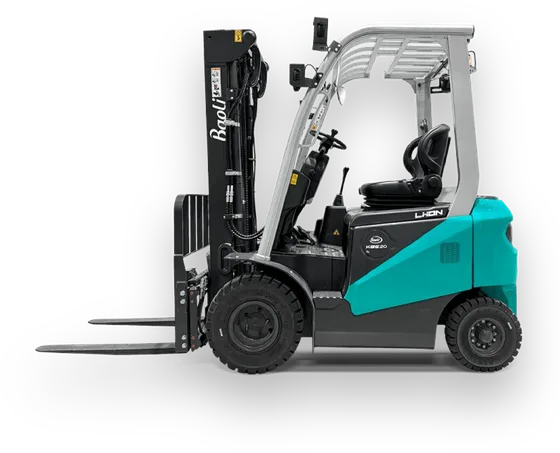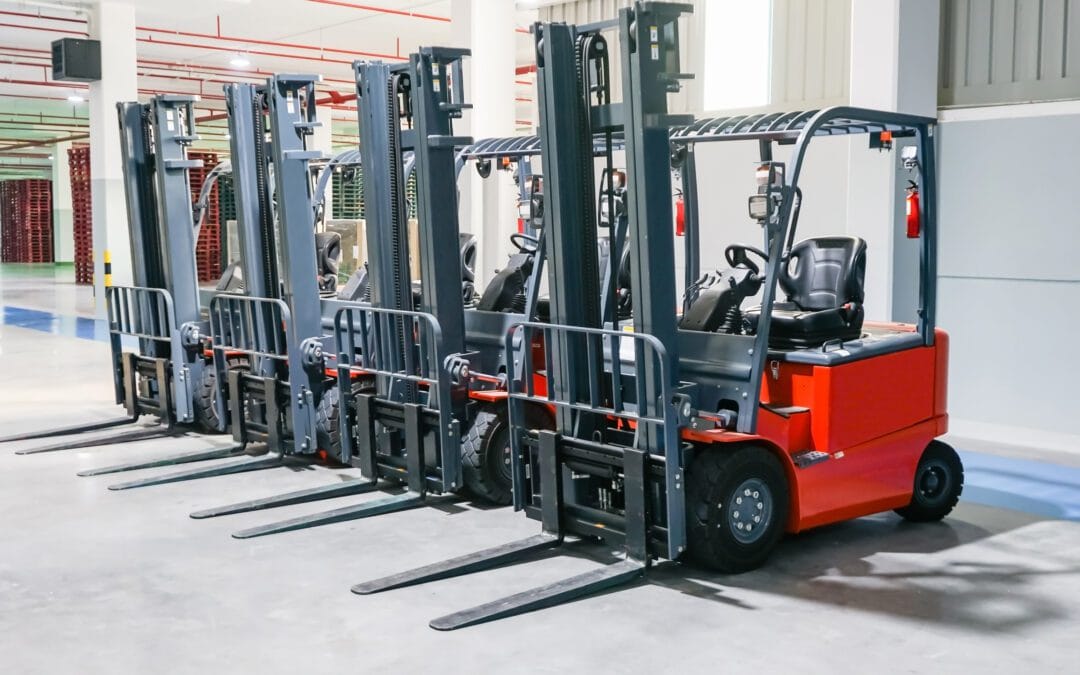
At the heart of the electric vehicle revolution is the technological marvel known as lithium-ion batteries. These advanced high-energy storage batteries have played a key role in shaping the future of transportation. One of the industries that immediately implemented it in their systems are work vehicles such as forklifts, stackers, electric pallets and various types of cranes. Today, electric forklifts cannot be imagined without lithium-ion batteries, which are very durable, long-lasting, reliable and offer a large number of working hours.
It all started at the beginning of the nineties of the last century when the lithium-ion battery became a possible alternative to the lead-acid batteries that we were used to until then and which were limited in energy storage, but also large and cumbersome.
Content:
The birth of the lithium-ion battery and the Nobel Prize in Chemistry
Advances and benefits of lithium ion batteries
Lithium-ion batteries have not yet reached their ultimate potential
Lithium-ion batteries do not lose their charge capacity
Lithium ion batteries and different technologies
The birth of the lithium-ion battery and the Nobel Prize in Chemistry
Lithium-ion batteries are rechargeable energy sources consisting of positive and negative electrodes separated by an electrolyte. The movement of lithium ions between the electrodes during the charging and discharging process enables efficient energy transfer. This unique mechanism makes lithium-ion batteries highly efficient and long-lasting. The appearance of these batteries on the market in the nineties of the last century changed the game in the electric vehicle industry, but also in the world in general. It paved the way for the wireless society we currently live in.
With their superior performance, they are today the backbone of modern electric mobility. They are an indispensable part of computers, smartphones, pacemakers, and so on electric forklifts and every device that draws its energy from batteries. As this technology continues to develop, we can expect even more significant breakthroughs that will shape our more sustainable future.
John B. Goodenough, an American physicist and materials scientist, played a significant role in the development of the lithium-ion battery. He is known for his work at the University of Texas at Austin. Rachid Yazami, a Moroccan-French scientist, made a key contribution to the understanding of lithium intercalation in graphite anodes, a key component of lithium-ion batteries. His research was instrumental in advancing the technology. Akira Yoshino, a Japanese chemist, is credited with creating the first commercially viable lithium-ion battery in the 1980s.
The combined efforts of these three researchers revolutionized portable electronic devices. These batteries have become the best energy storage solution for a variety of things, including smartphones, laptops, electric vehicles and renewable energy systems. They were awarded the 2019 Nobel Prize in Chemistry for their work.
Advances and benefits of lithium ion batteries
The relentless pursuit of technological progress has led to significant improvements in lithium-ion batteries. Manufacturers are constantly working to increase the density of these batteries and thus increasing efficiency, enabling faster charging times and ensuring better safety standards. Thus, they completely replace the internal combustion engine, but also take advantage of the power of clean energy sources.
- High energy density of these batteries means that they can store a large amount of energy in a relatively small, compact and lightweight package. This is especially important in the transportation industry, where space and weight are paramount to optimizing the performance of electric vehicles.
- Possibility of fast charging one of the most significant advantages of lithium-ion batteries. With advances in charging technology, vehicles equipped with these batteries now charge so quickly that it does not affect any work process at all. This is a segment on which manufacturers are making special efforts, so in the near future it can be expected that the batteries will be charged in the same amount of time as it takes for the pump to fill the tank with fuel.
- Longer battery life compared to conventional lead-acid batteries. The extended lifespan allows EV owners to enjoy years of reliable performance before needing a replacement. This durability factor contributes significantly to the overall cost-effectiveness of electric vehicles. So you don't have to be afraid of shopping either used electric forklifts.
- Improved security features are of utmost importance when it comes to battery technology, and lithium-ion batteries have made significant progress in this area. Manufacturers have implemented various safety features, such as thermal management systems and battery monitoring, to ensure safe operation in various conditions.
Lithium-ion batteries have not yet reached their ultimate potential
Energy density is actually the amount of energy that can be stored in a given volume or weight and is expressed in Wh/kg (watt hours per kilogram). Lithium-ion batteries in this segment are unmatched by any others currently on the market. High density usually ranges from 100-265 Wh/kg up to 315 Wh/kg. Unlike, say, nickel-cadmium or nickel-metal batteries, lithium batteries can be charged in a much greater number of cycles and do not lose their efficiency for years.
In the automotive industry, it has not been news for a long time that some electric vehicles can travel up to 500 kilometers on a single battery charge. On the other hand, scientists from the University of Pennsylvania managed to charge this battery in just ten minutes, which will solve the biggest strategic problems during transportation, so that time is not wasted on charging. Sales of electric cars thus exceeded 2.1 million, (2.6 percent of global car sales) in 2019 and that number is constantly increasing.
We are also working on developing batteries for aircraft, drones and satellites. There are currently three times more scientists developing these batteries in the US than there were just ten years ago. Prototypes of electric aircraft are already able to transport passengers 1,000 kilometers on a single battery charge.
Their economy is also very important. The prices of these batteries, which are produced mostly in Asia and America, have fallen by more than 80 percent in the last ten years. And others, like battery for forklifts, today they are more accessible with prices than a few years ago. As predicted, by 2025, the demand for lithium will grow almost three times higher than it is now. These batteries have the potential to make life on the planet 100 percent renewable in the future.
Lithium-ion batteries do not lose their charge capacity
It is known that batteries lose their power, i.e. their charge capacity, over time. However, lithium batteries used for mass consumption only begin to lose their capacity after 500 charge and discharge cycles. The situation is even better with those batteries that are installed in electric vehicles.
Great analysis of the company Geotab says that the breakdown of lithium-ion batteries in vehicles is so slow that most of them today outlive the life of the car itself.
The loss of capacity is small, from 1.6 to 2.5 percent per year, and the fact that vehicles with heavy use did not show significantly greater battery degradation is also pleasing.
However, in order for the battery to last as long as possible, it should always be charged between 20 and 80 percent. That's how batteries last the longest.
This is also clear to vehicle manufacturers, so most of them have systems that ensure that they are never fully charged or discharged. If it says that the battery is 100 percent full, it's probably not, but a little more than 90 percent.
Lithium batteries store energy for a long time. Only 1.5 to 2 percent are emptied per month. For example, lead batteries are already at 5 percent in a month, while those based on nickel lose up to 15 percent in one day. Thus, a lithium-ion battery, if it is full and intact, can save more than 80 percent of its energy in one year.
One of the most important things is their weight, that is, the lightness with which they enabled the world to become so wireless and portable. Imagine if your mobile phones weighed about 5 kilograms, you would get bored quickly.
Lithium ion batteries and different technologies
Lithium ferro phosphate was among the first commercialized technologies, but did not have sufficient density to be retained in electric vehicles. Lithium manganese oxide (LMO) another now older technology with high power but lower density. New batteries produced with this technology are suitable for electric bicycles and scooters. Lithium Manganese (LMR) is rich in manganese, which gives it a high energy density. Lithium sulfur is used most often in drones. It has a very high density.
Solid state lithium batteries are the next step in the development of this technology. The electrolyte is not liquid and thus cannot catch fire. The idea is to increase security. Such batteries should not burn during traffic accidents. In addition to being safer, they are also stronger and increase the range of electric vehicles. Currently, the disadvantage of these batteries is a longer charging time. However, some car companies have already announced that they will soon release vehicles with these batteries.
Most common lithium ion battery technologies:
- Lithium nickel manganese cobalt oxide (NMC cathode)
- Lithium nickel cobalt aluminum (NCA cathode)
- Lithium cobalt oxide (LCO cathode), exclusive consumer electronics
- Lithium Ferro Phosphate (LFP Cathode)
- Lithium manganese oxide backbone (LMO cathode)
- Lithium sulfur (Li-S, sulfur cathode)
- Lithium metal (anode), solid state
- Lithium titanate (LTO anode)
Lithium-ion batteries make forklifts even more efficient
Forklifts play a key role in various industries, from warehousing to manufacturing. Traditionally, forklifts were driven lead-acid batteries, but in recent years there has been a significant shift towards the adoption of lithium-ion batteries that can store more energy in the same amount of space, enabling forklifts, pallet trucks and electric stackers, to work longer without the need for frequent refills.
Advantages of lithium batteries in forklifts:
- Longer lifespan - lithium-ion batteries have a significantly longer service life compared to lead batteries. They can withstand a greater number of charge and discharge cycles, reducing the need for replacements, saving resources in the long run.
- Reduced maintenance - these batteries require minimal maintenance, unlike lead-acid batteries that require regular watering and equalization. This reduces the need for manual intervention, freeing up valuable time for forklift operators.
- More space - the compact and space-efficient design of lithium-ion batteries allows forklifts to have a larger storage capacity. This is particularly useful in tight storage areas where maximum compactness is required.
- Safer work - these batteries can withstand extreme temperatures, both hot and cold, without compromising their performance. They are suitable for forklifts that work in different conditions.
- Reduced weight - lithium batteries are significantly lighter, reducing the overall weight of the forklift. This contributes to better handling of the forklift and with a pallet, but also a more energy efficient vehicle.
- Lower overall costs - while lithium-ion batteries may have a higher initial cost, their longer life, reduced maintenance and energy efficiency result in lower total costs over the life of the battery.
Lithium ion batteries are the future of the world
Lithium-ion batteries have undoubtedly revolutionized the production of electric vehicles and transportation. The ever-evolving field of battery technology continues to push the boundaries of what lithium-ion batteries can achieve. As researchers and manufacturers strive for continuous improvement, several exciting advances are on the horizon.
Solid lithium batteries (solid state) are attracting considerable attention for their potential to increase security and energy density. By replacing the traditional liquid electrolyte with a solid alternative, the risk of leakage and heat loss can be mitigated, making vehicles even safer.
Efforts are underway to develop solutions for even faster charging lithium-ion batteries, which significantly reduces the time required for a full charge. These advances will make electric vehicles even more attractive to consumers who value the benefits of time efficiency.
Researchers from the Illinois Institute of Technology have developed lithium-air battery which could make every driver's dream come true to travel more than 1,000 kilometers on a single charge. This battery with solid electrolytes could also revolutionize transport as it is ideal for electric trucks, but also in air transport, by launching new versions of passenger and transport aircraft.
In response to concerns about the environmental impact of battery manufacturing and disposal, the industry is focusing on sustainable practices and recycling initiatives. By optimizing the battery recycling process, valuable materials can be reused, reducing the demand for new raw materials and minimizing waste.
Batteries for forklifts on offer
Look at the models we offer and choose the performance for your business.