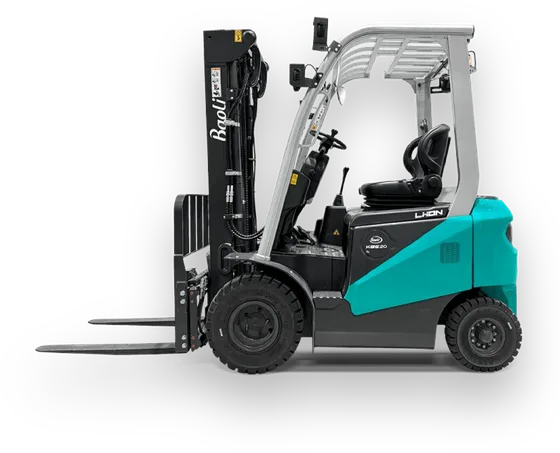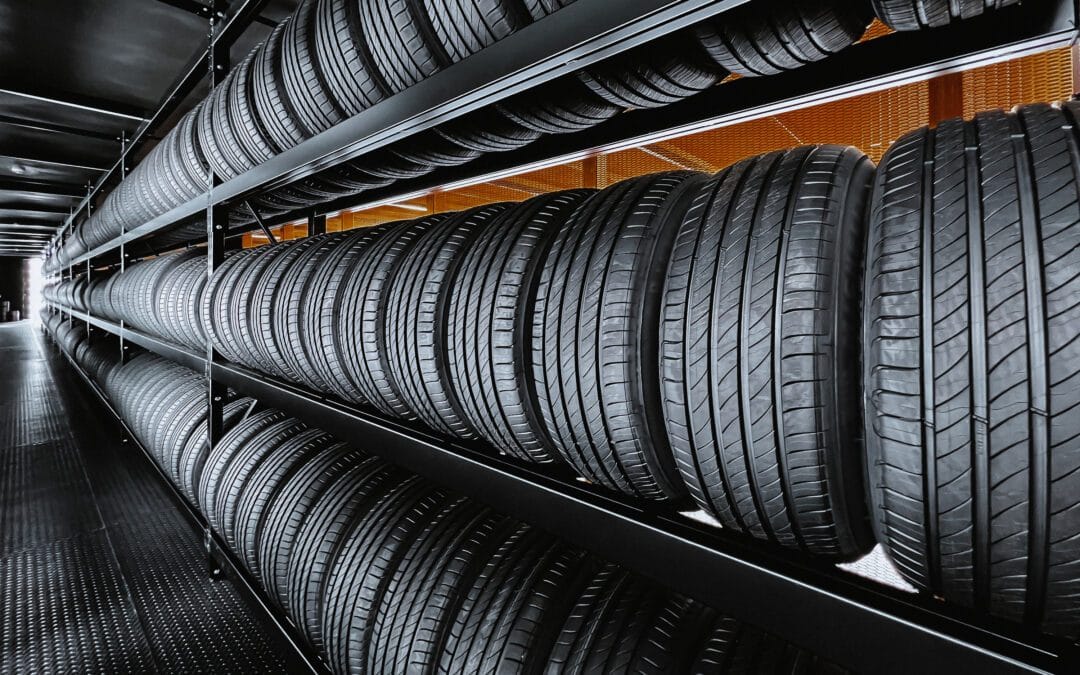
When deciding between a pneumatic tire (air) or a molded one (cushion tires), there are various factors to consider. Each of them has its advantages, but also what should be paid attention to, so that it does not turn into a disadvantage. The most important thing is that if the tire is old, worn and unusable, it should no longer be on yours forklift. Tires are one of the most important parts of a vehicle, when we talk about safety at work, but also efficiency and savings.
Pneumatic tires or not, they have to be in good shape to begin with
Forklifts are heavy vehicles that often move in closed, confined spaces near workers. Correct and new tires are essential for safety, in order to avoid incidents and accidents in the workplace. On the other hand, the tires on the forklifts should provide a good grip on the floor to avoid slipping and ensure the stability and control of the vehicle. Damaged and worn tires can lead to grip problems and reduce driver control.
Working with the right tires reduces repair costs and saves other essentials parts of this working machine, such as gearboxes and brakes, which can be damaged due to the use of worn tires. All this affects the productivity of your work, which will be much more effective and faster. The advice of experienced craftsmen is well known - don't skimp on tires! It is always recommended to regularly check the condition of the tires and replace them when necessary.
Details that make pneumatic and molded tires indestructible
Tires for forklifts they have a central pattern in the form of a "zig-zag" that minimizes vibrations, but also improves the ability to handle the vehicle in closed spaces. The design of the side patterns is such that they have very deep grooves, in order to ensure the best possible grip on the ground in open areas. This depth also increases the longevity of the tire, its working life. The extra width of the tire tread serves maximum stability. Tires often have a ring on the outside that is slightly protruding and goes around the rim, in order to absorb possible shocks and prevent damage to the wheels. The "pit stop" line is used to more easily recognize tire wear. When a line appears, usually orange in color, it means that the working life of the tire has come to an end, and it should be replaced.
In terms of durability, solid tires have the advantage. In the time it takes you to use up one set of solid tires, you'll use two to three sets of pneumatics.
Please note that tire load capacity may vary depending on the manufacturer and specific tire model. It is important to always check the manufacturer's specifications to ensure that the tire is suitable for the intended application and load requirements.

Pneumatic tires: comfortable, fast and long-lasting
Pneumatic tires are the most common type of tire used on vehicles. They consist of rubber that is inflated with air and placed on the rim. For forklifts they come in a variety of sizes and are easy to get. They are most often used in open and demanding terrain, such as ports, stations and warehouses where cargo is transferred, as well as construction sites. There is no uneven terrain that these tires will not cover with ease. Pneumatic tires are cheaper and lighter, but also less durable. They are drilled more often. While those filled with solid rubber are more stretchy, more difficult to damage, but also provide a more robust ride.
Advantages of pneumatic tires:
- Better grip on the floor: Pneumatic tires provide better grip compared to solid tires, especially when working on wet and slippery terrain.
- Greater driving comfort: These tires absorb shocks and vibrations from asphalt, dirt and gravel. Whatever the ground is underneath, it will provide a more comfortable ride.
- Better vehicle control: Pneumatic tires have better control over the vehicle, which can help avoid accidents and make work easier.
Disadvantages of pneumatic tires:
- More frequent maintenance: Pneumatic tires require regular air pressure checks, they can get punctured or burst.
- More expensive maintenance: Replacing and repairing pneumatic tires can be more expensive than retreaded ones.
- Poor performance at high temperatures: These tires can wear faster at high temperatures.
Solid tires: Harder than pneumatic tires
Molded tires they are made of hard rubber, which is placed on a metal frame, without air in the middle. They are easily recognized by the fact that you can see how the tire, as the name suggests, is literally "poured" onto the rim, i.e. the metal frame. They are known for their durability and resistance, making them a popular choice for interior use on smooth surfaces such as concrete. Ideal for closed warehouses and industrial plants. They, unlike pneumatic tires, slow down the vehicle, but that's why they provide more precise control, which is another welcome feature in closed and often cramped spaces. Simply, they need less space to turn.
Advantages of molded tires:
- Easy management: These tires provide a smooth ride for the forklift operator, which can reduce fatigue and increase worker productivity.
- No Drilling: Since there is no air in the tire, inflated tires cannot be punctured.
- Less maintenance: Molded tires do not require a pressure check and are easier to maintain.
- Lower price: They are generally less expensive than pneumatic tires, which can make them a cost-effective option for indoor use on flat surfaces.
- Less noise: They produce less noise than pneumatic tires, which can be important in closed environments where the noise level needs to be kept to a minimum.
Disadvantages of solid tires:
- Worse adhesion: Molded tires have a worse grip compared to pneumatic ones, which can be felt most when the ground is wet and slippery.
- Less driving comfort: These tires absorb less shock and vibration on the ground, so they can be tiring for the driver on rough outdoor terrain.
Solid tires - superelastic tires for forklifts (Solid tires)
Superelastic tires for forklifts are also called "solid tires", while in foreign markets they are most often found under the English term "solid tires". These tires are most often seen on forklifts that work in closed spaces, such as warehouses. They usually cover short distances. They can also be used outdoors, but only if the ground is not extremely uneven.
They are made of rubber and do not have an air part like pneumatic ones. They are filled with foam or other materials to create a cushioning effect, in order to work even on uneven terrain.
Can also be bought in white, (clean solid tires), if forklifts should not leave marks on the floor, for example in a food or pharmaceutical company.
They are extremely stable, economical and with a large load capacity. They do not require investments and are very reliable. In addition to forklifts, they are also used on transport vehicles that carry large loads, airport vehicles, platforms for working at height and other industrial means of transport.
- Incredibly elastic: Easy to install on pneumatic rims. The tread part is with deep grooves, very resistant to wear. The mixture from which they are made absorbs shocks and creates low rolling resistance, so it does not increase the temperature during operation. The side part of the tire is specially reinforced, resistant to impacts and cuts.
- Steel ring: They are often reinforced in two ways; with steel base or steel wire. That's how they handle even the heaviest loads. The steel ring around them is simply indestructible, but also cools the tire by dissipating heat. I can work without interruption, under full load and maximum intensity for years.
- Steel strips: They are made of several bundles of steel wires that are evenly distributed in the inner part of the tire around which the stiffest rubber compound is placed. This combination is proven to withstand even the heaviest loads and is highly resistant to the impact of sharp objects.
Polyurethane tires: Elegant and efficient
Polyurethane is a durable material that does not leave any traces, so it is ideal for making those tires that need to maneuver in closed spaces, to "slide".
Polyurethane tires are made by combining two components: polyol and isocyanate. When these two components are mixed, they undergo a chemical reaction that creates a highly elastic, rubber-like material that can be molded into various shapes and sizes. The resulting material is then poured into a mold and allowed to dry, forming a tough, durable rubber that can withstand heavy loads.
Thus, these tires are primarily characterized by a smooth surface and a low profile. This allows them to have strong traction and high load capacity, but also low resistance when turning and touching the ground. They fit perfectly into forklifts and pallet shops with a small gap and are very resistant to wear.
Unlike traditional tires, which can become rigid over time, polyurethane tires remain pliable and flexible for a long time. They are also highly resistant to chemicals, oil and other substances that can damage ordinary tires. Ideal for work in chemical and other industrial plants!
How to extend the service life of forklift tires
- Regular maintenance: Regularly check and maintain the tires on your work machines such as regular, racks or forklifts, to make sure they are properly inflated, worn evenly, and free of any damage or debris. Keep your tires clean and check for signs of wear or punctures.
- Proper storage: When not in use, store the forklift or stored tires in a dry, cool place, away from direct sunlight or heat. This will help prevent the tires from cracking or becoming brittle.
- Without overloading: Make sure that the forklift or stacker, is not overloaded beyond its rated capacity. Overloading can cause excessive tire wear, which can lead to premature failure.
- Proper driving: Avoid sudden starts, stops and turns, as these can cause excessive tire wear. Always drive at a safe speed and avoid going over curbs or other obstacles.
- Rotate the tires: Rotate tires regularly to ensure even wear and extend tire life. This will help prevent uneven wear from developing and extend the life of the tires.
- Appropriate choice: Choose the right tires for your bio on forklift electric or on fossil fuels. Different types of tires are designed for different environments and applications, so make sure you choose the right ones. By following these tips, you can help your tires last longer, reducing the cost and downtime associated with frequent tire changes.
Pneumatic tires or filled, there is really no dilemma
In the end, when choosing between solid and pneumatic tires, there should be no dilemma. Cast are typically used in jobs where forklifts operate indoors or on smooth surfaces, such as warehouses or loading docks. They are known for their durability and puncture resistance, which makes them ideal for heavy duty applications.
On the other hand, pneumatic tires, filled with air, are usually used outdoors and on rough terrain. They provide a smooth ride and better traction on uneven surfaces, making them ideal for construction sites or outdoor storage.
When choosing, to begin with, you should always start from four factors:
- Application: If the forklift is used primarily indoors on smooth surfaces, solid tires are a better choice. If you are in open, uneven terrain, it is better to choose pneumatic tires.
- Carrying capacity: Pneumatic tires can usually handle higher loads than solid tires, so consider the weight of the load the forklift will be carrying.
- Maintenance: Molded tires require less maintenance than pneumatic tires, as they cannot be deflated.
- Price: Different manufacturers offer different types of tires. There are always promotions and discounts. Take a good look at what is offered and calculate, considering the work you do, what is cheaper for you.
If you are looking for forklifts, spare parts or tires for these machines, check out our offer and services. And, of course, you always can schedule a service at our top repairmen.
Tires for forklifts on offer
Look at the models we offer and choose the performance for your business.